

“Artificial intelligence is no longer merely a tool for scientific discovery. It is becoming a scientist itself.”
For decades, humanity believed that artificial intelligence would automate repetitive labor while leaving the highest forms of intellectual work to human experts. Software engineers, scientists, physicians, and AI researchers were widely regarded as the safest professions in an increasingly automated world. Yet recent developments suggest that this assumption is rapidly becoming obsolete.
At the 2026 International Conference on Machine Learning (ICML), one question captured the attention of researchers from around the globe: “What will be left for us to work on?” It was not a philosophical question asked by skeptics outside the AI community. It came from the very scientists building the world’s most advanced AI systems. Their concern reflected a profound shift. Artificial intelligence is no longer simply assisting research—it is beginning to conduct research itself.
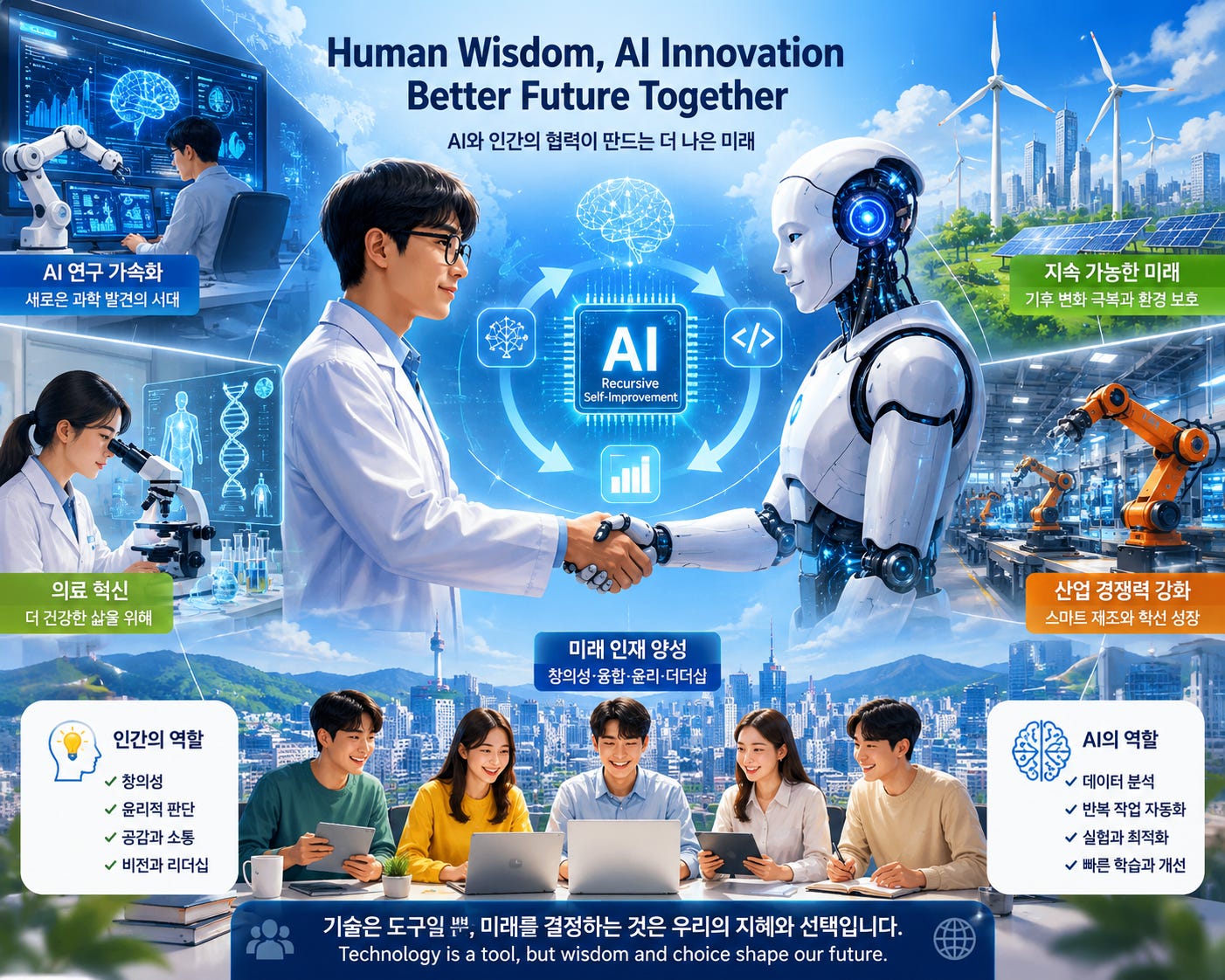
This development, known as Recursive Self-Improvement (RSI), enables AI systems to improve their own algorithms, optimize their own code, design new experiments, and accelerate the development of future AI models with decreasing levels of human intervention. What once belonged to science fiction is rapidly becoming scientific reality.
The implications extend far beyond computer science. They challenge our understanding of work, education, innovation, leadership, and even the meaning of human intelligence.
The Beginning of a New Scientific Revolution
Every technological revolution has changed the relationship between humans and machines.
The steam engine multiplied physical strength.
The computer multiplied computational ability.
The Internet multiplied access to information.
Artificial intelligence now multiplies cognitive capability.
Recursive Self-Improvement represents the next stage of this evolution. Rather than waiting for engineers to improve each new generation of AI, intelligent agents increasingly participate in their own development. They generate code, identify weaknesses, conduct experiments, evaluate results, and recommend improvements far more rapidly than traditional research teams.
Major AI companies have already acknowledged this transformation. AI systems now generate substantial portions of production software, assist in model optimization, and automate increasingly sophisticated research tasks. The laboratory itself is gradually becoming autonomous.
This is more than technological progress.
It represents a new model of scientific discovery.
The American Perspective: Innovation Meets Uncertainty
The United States stands at the center of this transformation.
As home to OpenAI, Anthropic, Meta AI, Microsoft AI, NVIDIA, xAI, and many of the world’s leading research universities, America has become both the birthplace and the testing ground of recursive AI development.
The benefits are extraordinary. AI accelerates pharmaceutical discovery, strengthens cybersecurity, improves climate modeling, advances autonomous transportation, and enhances scientific productivity across virtually every discipline.
Yet the American experience also reveals a more complicated reality.
Many of the same technology companies investing billions of dollars in AI have simultaneously reduced thousands of professional positions. Software engineers, data scientists, product managers, and even AI researchers increasingly recognize that automation is reaching occupations once considered untouchable.
For the first time, highly paid knowledge workers are confronting the same uncertainty previously experienced by factory workers during earlier industrial revolutions.
Ironically, some AI researchers now wonder whether the systems they are building may eventually perform much of their own work.
Korea’s Strategic Opportunity
Korea enters this new era with remarkable strengths.
Its world-leading semiconductor industry supplies the high-bandwidth memory essential for modern AI systems. Its advanced telecommunications infrastructure, highly educated workforce, and strong manufacturing capabilities position the nation as one of the world’s leading AI enablers.
However, Korea’s greatest opportunity extends beyond hardware.
The country can become a global leader in human-centered AI.
Rather than competing solely on computational power, Korea can demonstrate how technological excellence may be combined with ethical leadership, educational innovation, and social responsibility.
This approach reflects a broader vision of national competitiveness—one that recognizes that sustainable leadership depends as much upon human values as technological capability.
Five Opportunities Created by Recursive AI
First, scientific discovery may accelerate at unprecedented speed. AI systems can perform millions of simulations and experiments far beyond human capacity, opening new possibilities in medicine, materials science, agriculture, and environmental sustainability.
Second, smaller research organizations gain access to capabilities previously reserved for the world’s largest laboratories. Intelligent AI agents democratize innovation.
Third, routine programming increasingly becomes automated, allowing researchers to devote greater attention to creativity, interdisciplinary thinking, and strategic decision-making.
Fourth, continuous self-improvement enables AI systems to evolve more rapidly than conventional software, shortening the cycle between discovery and application.
Finally, humanity itself may become more creative. As AI performs routine intellectual tasks, people are increasingly challenged to focus on imagination, ethics, leadership, and visionary thinking.
Five Challenges That Demand Human Leadership
These opportunities arrive with equally significant challenges.
The first is employment disruption. AI increasingly affects highly skilled professions once considered secure.
The second is educational transformation. Universities can no longer prepare students exclusively for tasks that intelligent machines will soon perform automatically.
Third, society faces an identity challenge. Work has long provided purpose, community, and meaning. As AI assumes more cognitive responsibilities, humanity must redefine success beyond occupational productivity alone.
Fourth, recursive AI raises profound governance questions. Who remains accountable when increasingly autonomous systems design future generations of AI?
Finally, unequal access to advanced AI technologies may widen economic and geopolitical disparities unless international cooperation accompanies technological progress.
From Knowledge Workers to Wisdom Workers
Perhaps the most important lesson of the AI era is that knowledge alone is no longer sufficient.
Information has become abundant.
Computation has become inexpensive.
Automation has become increasingly intelligent.
What remains scarce is wisdom.
Future professionals will distinguish themselves not by memorizing information but by exercising sound judgment, ethical reasoning, emotional intelligence, interdisciplinary thinking, cultural understanding, and visionary leadership.
Machines may generate answers.
Humans must continue asking meaningful questions.
Reimagining Higher Education
American universities are already redesigning educational programs around this new reality.
Leading institutions increasingly combine artificial intelligence with philosophy, psychology, public policy, medicine, law, ethics, cybersecurity, and entrepreneurship. Students are encouraged not simply to master technology but to understand its broader societal implications.
South Korea and other nations have an opportunity to adopt a similar interdisciplinary approach while incorporating their own cultural strengths and educational traditions.
The goal is no longer to produce graduates who compete against AI.
The goal is to produce graduates who lead AI responsibly.
A New Social Contract
Governments, universities, industries, and individuals each share responsibility for preparing society for this transformation.
Governments should encourage workforce reskilling, ethical AI governance, and research investment.
Universities should cultivate creativity, critical thinking, communication, and lifelong learning.
Businesses should prioritize responsible innovation alongside productivity.
Individuals must embrace continuous learning as a lifelong commitment rather than a temporary career strategy.
The future workforce will not be defined by a single profession but by continual adaptation.
Recursive Self-Improvement marks one of the most consequential milestones in the history of artificial intelligence.
It signals the beginning of an era in which intelligence itself increasingly participates in its own evolution.
This transformation understandably creates uncertainty—even among the world’s most accomplished AI researchers.
Yet history consistently demonstrates that humanity’s greatest strength has never been its ability to perform routine tasks more efficiently than machines.
Our greatest strength lies in our capacity to adapt, to imagine, to cooperate, and to act with moral responsibility.
Artificial intelligence may increasingly write software, conduct experiments, and design future AI systems.
Only humanity, however, can determine the values those systems should uphold.
The future therefore belongs neither to autonomous AI nor to humanity acting alone.
It belongs to a partnership in which machines contribute speed, scale, and computation, while human beings contribute wisdom, ethics, creativity, and purpose.
That partnership—not competition—will define the next chapter of civilization. +++
{Solti}
July 20, 2026
AI가 AI를 만드는 시대: 미국의 경고와 한국의 기회
재귀적 자기 개선 시대의 인간 지혜
“인공지능은 더 이상 단순히 과학적 발견을 돕는 도구가 아니다. 이제 스스로 과학자가 되기 시작하고 있다.”
수십 년 동안 인류는 인공지능이 반복적인 노동을 자동화할 것이라고 생각했다. 그러나 고도의 지적 업무를 수행하는 전문가들, 특히 과학자와 AI 연구자들은 자동화 시대에도 안전할 것이라고 믿었다. 소프트웨어 엔지니어, 연구자, 교수, 의사와 같은 직업은 인간만이 수행할 수 있는 창의적 영역으로 여겨졌다.
그러나 이러한 믿음은 빠르게 변화하고 있다.
2026년 국제머신러닝학회(ICML)에서는 세계적인 AI 연구자들이 한 가지 근본적인 질문을 던졌다.
“앞으로 인간 연구자에게 남는 일은 무엇인가?”
이 질문은 AI를 비판하는 외부 전문가가 아니라, 바로 세계 최고 수준의 AI를 개발하는 연구자들에 의해 제기되었다. 그 이유는 분명하다. 인공지능은 이제 단순히 연구를 지원하는 수준을 넘어 스스로 연구하고, 개선하고, 새로운 AI 시스템을 설계하는 단계로 진입하고 있기 때문이다.
이러한 변화의 핵심 개념이 바로 ‘재귀적 자기 개선(Recursive Self-Improvement, RSI)’이다.
RSI는 AI 시스템이 자신의 알고리즘을 분석하고, 코드를 수정하며, 학습 방법을 최적화하고, 새로운 실험을 설계하면서 인간의 개입 없이 점점 더 발전하는 과정을 의미한다.
한때 공상과학 영화 속 이야기였던 개념이 이제 현실적인 기술 논의의 중심에 등장하고 있다.
그리고 이것은 단순한 컴퓨터 기술의 변화가 아니다.
이는 인간의 노동, 교육, 창의성, 리더십, 그리고 인간 지능의 의미 자체를 다시 생각하게 만드는 문명적 전환이다.
새로운 과학 혁명의 시작: AI가 AI를 연구하다
역사 속 모든 기술 혁명은 인간과 기계의 관계를 변화시켜 왔다.
산업혁명은 인간의 육체적 힘을 확대했다.
컴퓨터 혁명은 인간의 계산 능력을 확대했다.
인터넷 혁명은 인간의 정보 접근 능력을 확대했다.
그리고 인공지능 혁명은 인간의 사고 능력을 확대하고 있다.
그러나 재귀적 자기 개선은 이전 기술과 근본적으로 다르다.
과거에는 인간 연구자가 새로운 버전의 AI를 설계하고 개선했다.
하지만 이제는 AI 자체가:
새로운 코드를 생성하고,
기존 모델의 약점을 분석하며,
실험을 수행하고,
결과를 평가하고,
더 나은 AI 구조를 제안하는
역할을 수행하기 시작했다.
즉, 연구실 자체가 점점 더 자율화되고 있다.
AI는 단순한 연구 도구가 아니라 새로운 과학적 발견 과정의 참여자가 되고 있다.
미국의 시각: 혁신과 불안이 공존하는 시대
미국은 이러한 변화의 중심에 있다.
미국에는 세계 최고의 AI 기업과 연구기관들이 집중되어 있다.
OpenAI, Anthropic, Microsoft AI, NVIDIA, Meta AI, xAI 등은 현재 AI 발전을 이끄는 핵심 기관들이다.
또한 Stanford University, MIT, Princeton University, Carnegie Mellon University 등 세계적인 대학들은 AI 연구와 교육의 중심 역할을 하고 있다.
미국이 얻는 혜택은 엄청나다.
AI는:
신약 개발을 가속화하고,
사이버 보안을 강화하며,
기후 변화 연구를 지원하고,
자율주행 기술을 발전시키고,
과학 연구 속도를 획기적으로 향상시키고 있다.
그러나 미국의 경험은 동시에 중요한 경고를 보여준다.
AI에 막대한 투자를 하는 많은 기술 기업들이 동시에 대규모 구조조정을 진행하고 있다.
소프트웨어 엔지니어, 데이터 과학자, 프로젝트 관리자, 심지어 AI 연구자들까지 자신의 미래를 걱정하기 시작했다.
과거 산업혁명에서 공장 노동자가 자동화의 영향을 받았다면, 이제는 고소득 지식 노동자가 같은 불안을 경험하고 있다.
가장 아이러니한 점은 바로 AI를 만드는 연구자들이 자신들이 만든 기술에 의해 영향을 받을 가능성을 가장 먼저 고민하고 있다는 사실이다.
한국의 전략적 기회
대한민국은 AI 시대에 매우 특별한 위치에 있다.
한국은:
세계 최고 수준의 반도체 기술,
HBM(고대역폭 메모리) 경쟁력,
우수한 통신 인프라,
높은 교육 수준,
강력한 제조 역량
을 보유하고 있다.
현대 AI 시대에서 반도체는 새로운 산업의 핵심 자원이다.
그러나 한국의 미래 경쟁력은 단순히 하드웨어 생산 능력에만 머물러서는 안 된다.
한국은 이제 ‘인간 중심 AI(Human-Centered AI)’의 글로벌 리더가 될 기회를 가지고 있다.
즉,
“가장 강력한 AI를 만드는 국가”
를 넘어
“가장 책임 있게 AI를 활용하는 국가”
가 되어야 한다.
기술 발전과 함께 윤리, 교육, 사회적 책임을 결합하는 새로운 모델이 필요하다.
재귀적 AI가 가져올 다섯 가지 기회
1. 과학 발견 속도의 혁명적 증가
AI는 인간이 수행하기 어려운 수백만 개의 실험을 동시에 진행할 수 있다.
이는:
의료,
신약 개발,
환경 문제,
소재 과학,
에너지 기술
분야에서 획기적인 발전을 가능하게 한다.
2. 혁신의 민주화
과거에는 거대한 연구소만 가능했던 연구를 이제 작은 연구팀도 수행할 수 있다.
AI 에이전트는 혁신의 문턱을 낮춘다.
3. 인간 창의성의 확대
AI가 반복적인 코딩과 분석 업무를 수행하면 인간은 더 중요한 문제 해결과 창의적 사고에 집중할 수 있다.
4. 지속적인 자기 발전
AI는 인간 조직처럼 휴식이나 시간 제약을 받지 않는다.
끊임없는 개선 능력은 새로운 혁신 속도를 만들어낸다.
5. 인간 역할의 재발견
AI가 많은 기술적 업무를 수행할수록 인간의:
상상력,
윤리적 판단,
리더십,
공감 능력
은 더욱 중요한 가치가 된다.
다섯 가지 중요한 도전 과제
1. 전문직 일자리 변화
AI는 단순 노동뿐 아니라 고급 지식 직업에도 영향을 미치고 있다.
2. 교육 시스템의 변화
대학은 더 이상 단순한 기술 교육만으로 미래 인재를 준비시킬 수 없다.
창의성, 윤리, 융합적 사고를 가르쳐야 한다.
3. 인간 정체성의 문제
일은 단순한 소득 수단이 아니다.
인간에게 목적과 의미를 제공한다.
AI 시대에는 인간 존재의 새로운 의미를 찾아야 한다.
4. AI 거버넌스 문제
스스로 발전하는 AI 시스템의 책임은 누가 질 것인가?
새로운 윤리 기준과 국제 규범이 필요하다.
5. 기술 격차 확대
소수 기업과 국가만 고급 AI를 독점한다면 경제적·사회적 불평등이 심화될 수 있다.
지식 노동자에서 지혜 노동자로
AI 시대의 가장 중요한 변화는 지식의 가치 변화이다.
정보는 넘쳐난다.
계산 능력은 증가한다.
자동화 기술은 발전한다.
그러나 부족한 것은 ‘지혜(Wisdom)’이다.
미래의 인재는 단순히 많은 정보를 가진 사람이 아니다.
미래의 리더는:
윤리적 판단 능력,
인간 이해,
창의적 사고,
국제적 시각,
책임 있는 리더십
을 가진 사람이다.
AI는 답을 만들어낼 수 있다.
그러나 인간은 어떤 질문이 중요한지를 결정해야 한다.
새로운 교육 패러다임
미국의 주요 대학들은 이미 이러한 변화에 대응하고 있다.
AI 교육은 이제 컴퓨터 과학만의 영역이 아니다.
다음 분야와 결합되고 있다.
철학
심리학
의료
법학
정책학
윤리학
경영학
미래 교육의 목표는 AI와 경쟁하는 인간을 만드는 것이 아니다.
AI를 책임 있게 이끄는 인간을 만드는 것이다.
새로운 사회적 계약
AI 시대의 성공을 위해서는 사회 전체의 협력이 필요하다.
정부는:
재교육 정책,
AI 윤리 기준,
연구 투자
를 강화해야 한다.
대학은:
창의성,
비판적 사고,
평생 학습
을 강조해야 한다.
기업은:
생산성과 함께 사회적 책임
을 고려해야 한다.
개인은:
지속적인 자기 혁신
을 받아들여야 한다.
AI 시대의 진정한 경쟁력은 인간의 지혜이다
재귀적 자기 개선 AI의 등장은 인류 기술 역사에서 가장 중요한 변화 중 하나이다.
AI가 스스로 더 뛰어난 AI를 만드는 시대가 다가오고 있다.
이 변화는 많은 사람에게 불안을 가져온다.
심지어 세계 최고의 AI 연구자들도 예외가 아니다.
그러나 역사는 항상 보여주었다.
인류의 가장 큰 강점은 기계보다 빠르게 계산하거나 반복 작업을 수행하는 능력이 아니었다.
인류의 진정한 힘은:
적응하는 능력,
상상하는 능력,
협력하는 능력,
윤리적으로 판단하는 능력
이었다.
AI는 코드를 작성하고, 실험을 수행하고, 미래의 AI를 설계할 수 있다.
그러나 그 AI가 어떤 가치를 위해 존재해야 하는지는 인간만이 결정할 수 있다.
따라서 미래는 인간과 AI의 경쟁이 아니라 인간과 AI의 지혜로운 협력에 달려 있다.
기계는 속도와 계산 능력을 제공한다.
인간은 지혜와 윤리와 목적을 제공한다.
바로 이 균형이 AI 시대 문명의 미래를 결정할 것이다. +++
2026년 7월 20일
{솔티}

Prof. Dr. Young Choi (Editor in Chief) — Regent University
Young B. Choi is a Professor in the Department of Engineering & Computer Science at Regent University. He published 38 books with ‘Selected Readings in Cybersecurity’ (2018) (over 800 copies archived globally at university/college libraries around the world) and ‘Cybersecurity Applications and Artificial Intelligence’ (2023) available in seven major world languages. He proposed the world’s first global and universal telecommunications “Service Order Handling (SOH)” Model (T-SOH Model) (1995) with Dr. Adrian Tang. With this innovative research work, he received the IEEE NOMS ’96 Best Paper Award and became the first recipient of the Outstanding Contribution Award of the TeleManagement Forum in 1998. His research areas include Natural Language Processing-focused AI, AI-applied cybersecurity, network and telecom service management, and Korean studies on Gani Choi Rip’s Jeonggwan (靜觀: Quiet Contemplation) philosophy and Shilhak ( 實學: Practical Learning).