

A July 20, 2026 report in Inside Higher Ed describes a Sino-U.S. university, an American university’s China campus, as an institution shaped by unclear employment arrangements, retaliation, discrimination, wrongful termination, hollow shared governance, and what faculty themselves call a culture of fear. The faculty who spoke out came from Scotland, Ireland, England, Korea and western worlds. Their nationalities differed. Their vulnerability did not. And for Korean and Korean-American scholars, who increasingly staff these transnational campuses, that vulnerability is not hypothetical. It is the environment many of our colleagues already work in.
A Structure Built to Deflect Responsibility
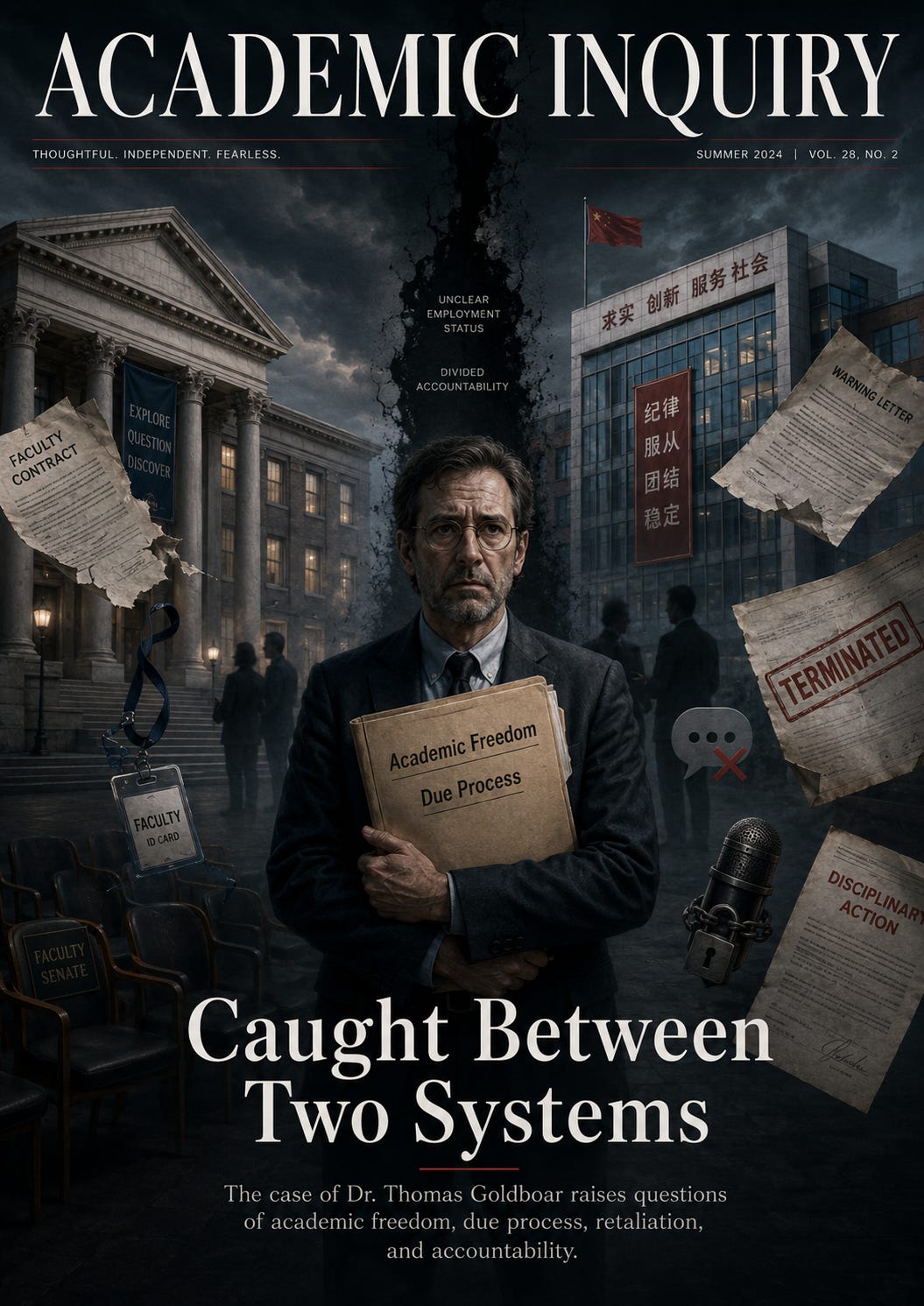
The heart of the problem is a deliberate ambiguity between the American parent institution and its China campus. The American side markets the partnership, awards its own degrees, shapes curriculum, and controls senior appointments. It draws reputation and revenue from the arrangement. Yet when faculty seek American protections, tenure, union representation, due process, civil-rights safeguards, they are told the China campus is the employer.
This design lets both sides escape accountability. The American institution blames the local campus. The local campus points to the American institution’s academic control. Faculty are left uncertain who employs them, which laws protect them, and where a fair hearing might be found. One professor in the report put it plainly: each party can always blame the other.
What Western Faculty Are Encountering in China
The specifics matter, because they show how the structure bites. Foreign faculty over China’s retirement age, the report notes, may be quietly placed on service contracts rather than labor contracts, forfeiting mandatory severance, often without being told the difference. Reappointment criteria are described as elusive. Human resources deflects. Administrators go silent. Professors who question the system fear their contracts will simply lapse. One veteran faculty member, who had taught in Kuwait, Lebanon, Mexico, Korea, and across Europe and North America, said he had seen deportations and even faculty kidnapped abroad, but had never encountered this degree of contractual evasion and refusal to engage with faculty governance.
That testimony should stop us. These are not first-time expatriates who misread a contract. They are seasoned international academics, and the structure still left them exposed. A separately reported case, that of Dr. Thomas Goldboar, who raised concerns about academic integrity, English-language instruction, discrimination, research ethics, and governance, and was then suspended, excluded from duties, disciplined, and terminated, follows the same arc. Whether one case or nine, the pattern is institutional.
Why Korean and Korean-American Scholars Are Especially Exposed
Korean and Korean-American academics are increasingly present in exactly these settings: joint ventures, branch campuses, and English-medium programs that promise Western standards under non-Western political and administrative control. The danger the report exposes is structural, and structural dangers do not check passports.
But diaspora scholars carry added weight. Korean-American faculty may hold American credentials and expectations of due process, then discover those expectations evaporate on a campus that is neither fully American nor fully Chinese. Korean nationals may face pressure to read local hierarchy as something to be endured quietly. Many of us are far from family, unfamiliar with local labor law, and reluctant to risk a visa by speaking up. Cultural deference, real or assumed, can be exploited to keep heads down and mouths closed. Isolation is the condition under which a culture of fear thrives, and it is a condition our community is too often placed in alone.
On the Question of Political Control
Care is warranted. The evidence does not show that every personnel decision was ordered by the Chinese Communist Party. What it does show is that such campuses operate within a political and administrative framework capable of placing state priorities above academic independence, and that the American partner knowingly lends its name, accreditation, and degree authority to that framework. One faculty member put the atmosphere bluntly: control, quiet, and concealment. That is the honest claim, and it is serious enough on its own.
American in Name Is Not American in Practice
An American education is more than a diploma or a brand. It rests on free inquiry, independent faculty judgment, fair procedures, and protection from retaliation. Export the degree while abandoning those principles, and higher education becomes a commodity, exactly the word one former president used when this partnership began. A genuine American university abroad must be American in academic freedom, faculty rights, and daily practice, not only in its seal.
A Call to One Another
For Korean and Korean-American scholars, the lesson is twofold. Before we sign: ask which contract, which employer, which law, which appeal. Ambiguity offered as reassurance is a warning. After we arrive: solidarity. We should know one another’s names, share what we learn, document quietly, and refuse the isolation these structures depend on. A colleague pushed out without severance days before a filing deadline is not a private misfortune. It is a signal to all of us.
We protect our own by seeing clearly and standing together. In systems designed to divide faculty and diffuse responsibility, a united diaspora community is not a comfort. It is a defense.
© K-Global Scholars and Professionals Forum. All rights reserved. Content published in the K-GSP Forum may not be reproduced, distributed, or transmitted in any form without prior written permission from the K-GSP Forum, except for brief quotations with full attribution.
July 20, 2026
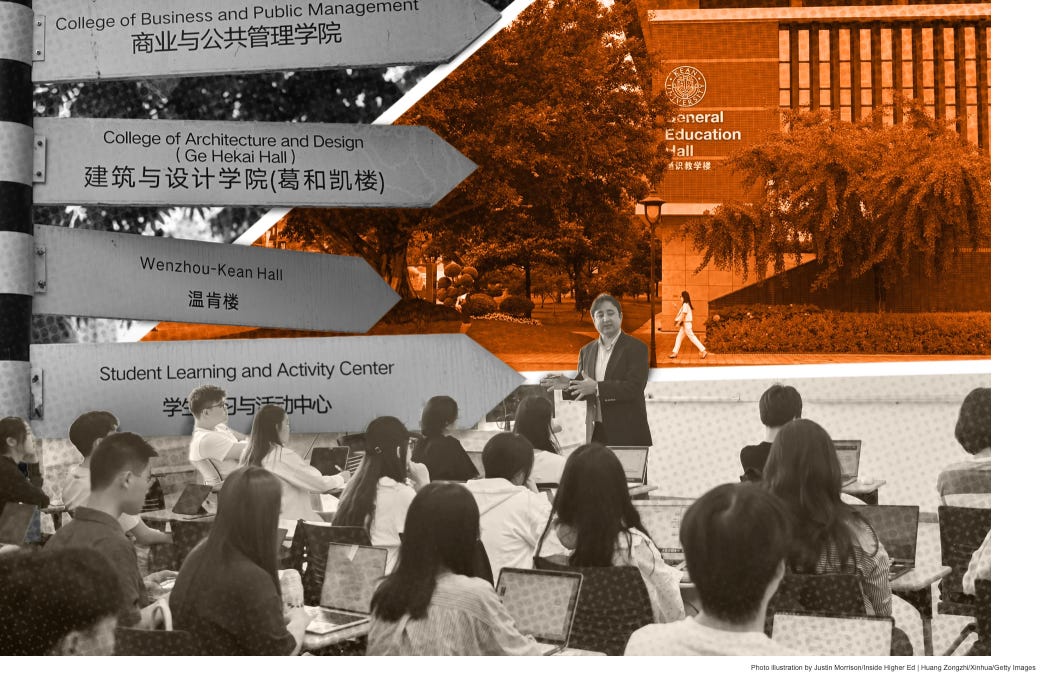
Inside the ‘Culture of Fear’ at One American-Chinese University
Faculty at the American-Chinese University have accused their employer of obfuscatory employment agreements, wrongful termination, discrimination, retaliation and lack of shared governance.
Original Article: