
This article is an English translation of the original Korean text written by the author, Hwansun Joo, prepared for K-GSP Forum readers.
I began painting in oils during my final year at a vocational school in Japan, around 2012. By then, I had already made up my mind — I would pursue painting, not the design I had studied back in Korea. I had always loved drawing faces. I painted portraits of classmates in oil, and after graduation, I spent long hours studying photographs I found online, practicing and practicing.
My formal training was in visual design in Korea and graphic arts in Japan. Because of that, working with oil and acrylic still felt unfamiliar to me. Materials were expensive, and I could not always afford them. So I painted over pages already covered in sketches, layered new work on top of failed canvases, and learned with my hands and my body. It was a slow, solitary education.
In 2013, I stumbled upon a documentary about Korean independence activists. Something shifted in me that day. A quiet conviction took root: I wanted to paint these people. But that conviction did not immediately find its way onto canvas in any form I was ready to show the world.
That autumn, I returned to Korea. International shipping was costly, so I divided my belongings three ways — what I needed immediately I carried myself, less urgent items went by air, and the rest traveled by sea. Paint and brushes went into a postal parcel. Large canvases were disassembled and shipped by freighter. To cut costs, I left all my practice work behind. The early sketches of independence activists no longer exist.
“Who Is This Person?”
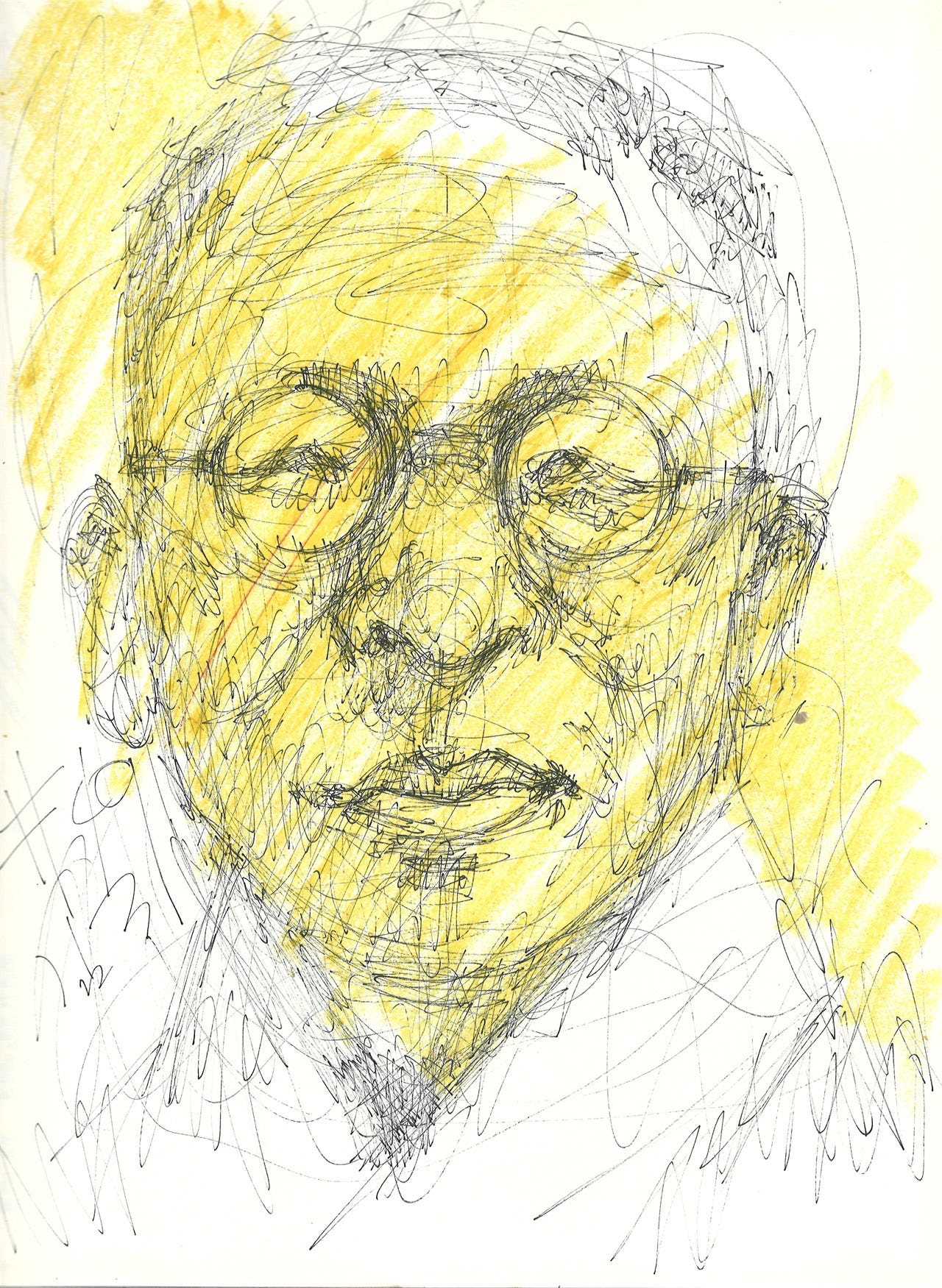
Figure 1. Sketch of Kim Gu — the only surviving sketch of an independence activist from this period. Unlike the Japanese-period works, this one was made after the artist’s return to Korea. (© Hwansun Joo)
Back in Korea, I picked up the brush again right away. I wanted to return seriously to what I had only touched on in Japan — painting those faces, holding onto what I had felt there. But the moment I actually tried, the work resisted me. Emotion and expression both felt clumsy. The white canvas frightened me. My head was full of thoughts; my feelings were tangled.
The more stuck I felt, the deeper I went into research. I kept the emotional register of the paintings spare and simple, but I pushed myself to understand the historical context and the lives of these people more fully. In the course of that research, I came across an account claiming that footage of Itō Hirobumi’s assassination actually existed — but that Japan had never released that portion of the film. Stories like that left more questions in me than answers. My first completed painting was of Ahn Jung-geun.
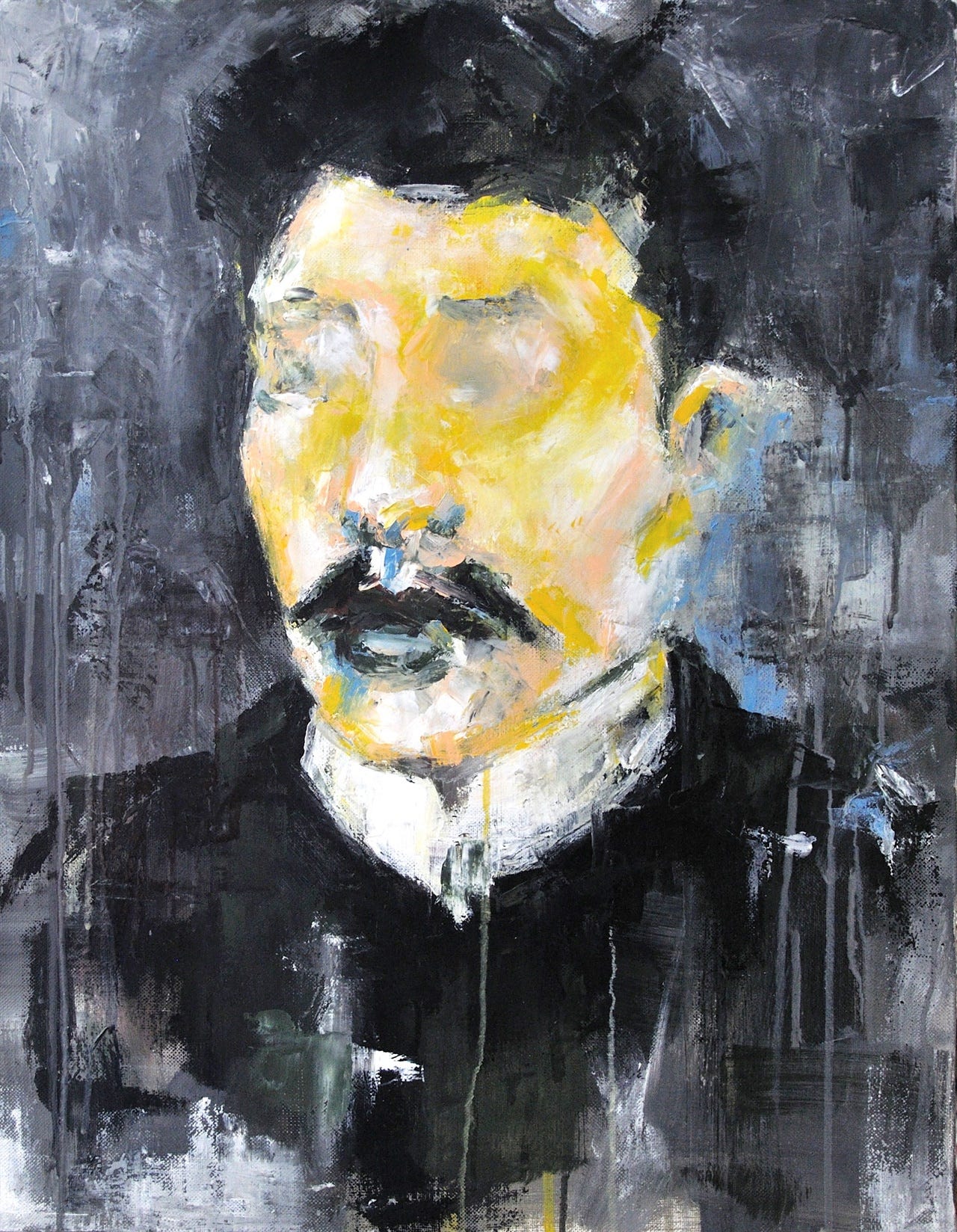
Figure 2. Historying — Face Me: Ahn Jung-geun (Thomas). In the process of aesthetically reconstructing the historical record, certain elements have been intentionally altered to express what is absent — the gaps. This work traces parts of our ancestors’ lives onto canvas, grounded in historical evidence, while offering contemporary viewers another dimension of history: the understanding that history is not merely a record, but a living organism. It is also an act of aesthetic interference — one filtered through the artist’s own emotion and thought. (© Hwansun Joo)
— Historying Artist’s Note
The portraits I paint of independence activists have no eyes. There are two reasons for this. The first is that I did not feel worthy of meeting their gaze directly. The more I read, the more faces I studied, the more complicated my feelings became. What remained most persistently was a sense of guilt — of being sorry.
The second reason is that I wanted to leave a sharper, more unsettling impression on the viewer. Eyes are what breathe life into a face, and they are what define a person. By removing them, I am asking: Who is this person? I want to return that strangeness, that discomfort — that shame — to the person standing in front of the painting.
Facing the Independence Activists
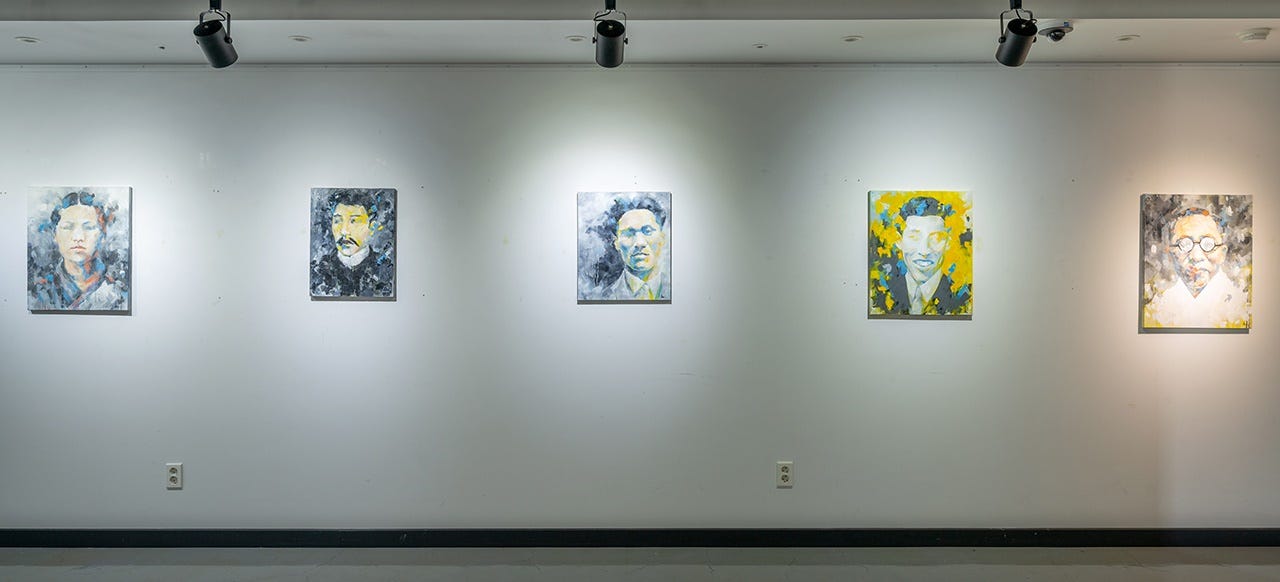
Figure 3. 2024 Solo Exhibition Dongnip (Independence), Gwangju — installation view of the Face Me series. Pictured is Choi Jong-yul, honorary ambassador for Patriot Ahn Jung-geun. (© Hwansun Joo)
This is how the series Face Me began. Brushstrokes dry, then are painted over. Colors accumulate, disappear, resurface. I work mostly with a palette knife rather than a brush, building texture on the surface, pressing the face and its time into the canvas together. Roughly thirty works have been completed this way. By number alone, that may seem a small body of work for an artist.
Independence activists remain at the center of my practice, but alongside them I have taken on portrait commissions and worked on other series in the margins. Illustration work on independence figures continued as a separate thread. Raising a child while maintaining the practice meant the pace slowed further. But I never once thought about stopping.
Before moving to the United States, I donated several works to the descendants and memorial organizations connected to the people I had painted. When I asked myself who, besides me, would truly care for these paintings, those were the people who came to mind first. There was a quiet relief in knowing each piece had found its rightful place.
I work primarily in digital media now, here in the United States. The materials and the environment have changed. The way I approach these figures has not. I still study, still gather sources, still send questions to specialists and historians to verify what I can. I am still painting them. And I hope that my records and my paintings will stay with someone, somewhere, for a long time.
About the Author
Hwan Sun Joo is a Korean-American portrait artist who has spent over a decade painting more than 160 Korean independence activists, giving faces to heroes history nearly forgot. Through his Portrait and Wave series and eight solo exhibitions, he renders sacrifice and inner life. He now paints daily from North Carolina. His artwork is availble here: Hwansun Joo’s Artworks
To support his Artworks: Click the button

https://www.paypal.com/paypalme/HwansunJoo
© K-Global Schoalrs and Professionals Forum. All rights reserved. Content published in the K-GSP Forum may not be reproduced, distributed, or transmitted in any form without prior written permission from the K-GSP Forum, except for brief quotations with full attribution.