

EXECUTIVE SUMMARY
Local breakfast and lunch chains in the United States remain resilient in the AI era not by competing with technology, but by anchoring themselves in daily human habits, operational discipline, and community-based interactions. Drawing parallels with Japan’s long-surviving food and hospitality firms, their endurance is driven by identity-embedded operations, freshness-focused production, and trust-based relationships that are difficult to digitize or replicate. As AI transforms scalable and data-driven industries, these businesses demonstrate a distinct and sustainable advantage grounded in routine consumption, human connection, and localized execution.
Keywords: Breakfast economy; food service resilience; identity-driven operations; human-centered consumption; AI era
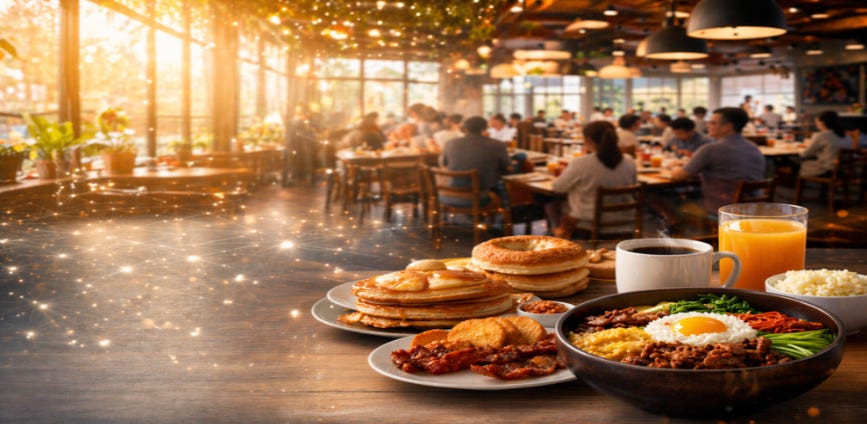
Figure 1. The Enduring Power of Local Food Chains in the AI Era
Daily rituals of fresh, local meals anchor human connection and operational resilience beyond what AI can replicate. In a rapidly digitizing world, breakfast remains a powerful model of trust, routine, and community-driven value creation.
1. INTRODUCTION
On a cold weekday morning in Toledo, a quiet line forms outside a neighborhood bagel shop before sunrise. Construction workers, nurses finishing night shifts, and professors on their way to class step in, order without hesitation, and move on — returning day after day because the routine fits seamlessly into their lives. These businesses, often modest in scale and deeply embedded in their communities, remain integral to everyday life, raising a central question: why do certain food service firms endure — even thrive — when many sectors are being reshaped by automation and platform competition?
Artificial intelligence is rapidly transforming industries once considered foundational to modern economies — from manufacturing and logistics to finance and healthcare¹ — yet local breakfast and lunch chains continue to operate with remarkable stability. Their resilience suggests a deeper logic: in an AI-driven economy, competitive advantage will belong not only to those who build AI, but to those who understand human routines, echoing earlier insights that enduring firms rely on disciplined consistency rather than short-term optimization.² Recent advances in generative AI and food service automation — including AI-driven ordering, kitchen robotics, and delivery optimization — have improved efficiency and scale in large chains, but have had limited impact on routine-based, locally embedded consumption. In the United States, breakfast and coffee segments have shown steady post-pandemic recovery, with repeat visits and morning traffic rebounding as consumers returned to familiar rhythms.
2. COMPARATIVE MODELS OF ROUTINE-EMBEDDED ENDURANCE
Across advanced economies, enduring firms cluster in essential sectors — food, drink, hospitality, and logistics — where stable demand, repeatable routines, and trust built over time reflect a structural logic of identity-embedded operations and disciplined execution. While pathways differ by context, these firms share a common foundation: they align operational systems with patterned human behavior, embedding their offerings into everyday life in ways that sustain long-term resilience despite technological disruption. Importantly, routine-based consumption is not simply an individual behavioral phenomenon but is socially structured and institutionally reinforced.³ Across countries, differences in cultural norms, interaction styles, and system design shape how routines are formed, maintained, and scaled — demonstrating that endurance arises not from a single formula but from distinct alignments between human interaction patterns and operational systems.
2.1 Japan: Continuity, Craft, and Community
In Japan, the prevalence of centuries-old firms — often referred to as shinise — is especially striking. A significant share of these long-lived businesses are concentrated in food, beverage, and hospitality sectors, including traditional inns (ryokan), sake breweries, and tea houses. Their longevity is rooted in disciplined craftsmanship, intergenerational knowledge transfer, and a strong commitment to preserving tradition. Rather than pursuing rapid expansion, these firms emphasize continuity by maintaining core recipes, service rituals, and quality standards while adapting selectively to changing conditions. Japan is home to more than 33,000 companies over 100 years old — the highest concentration of century-old firms of any country in the world — with food, beverage, and hospitality sectors accounting for a disproportionate share of these enduring enterprises.⁴
These firms operate as custodians of both product and cultural identity. Their competitive advantage lies in the consistent execution of practices refined over generations, supported by deep community trust. Endurance is achieved not through scale, but through the stability of routines embedded in shared cultural expectations. This model illustrates how identity-driven continuity can sustain relevance even in a rapidly changing global economy.
2.2 Germany: System Discipline and Institutional Reliability
Germany represents a system-mediated model in which routines are sustained through structured processes and institutional reliability. Many long-standing firms — particularly within the Mittelstand — operate in food production, hospitality, and logistics with a strong emphasis on process consistency, workforce training, and incremental innovation. Routine-based consumption is embedded within institutional frameworks that reinforce disciplined execution, standardized procedures, and coordinated operational systems.
In this context, trust is placed not in interpersonal relationships but in the reliability of the system itself. Customers expect consistent outcomes because processes are stable and repeatable. Endurance emerges from system integrity, where routines are sustained through organizational discipline rather than cultural ritual. This model demonstrates how institutional structure can transform individual habits into scalable, system-level reliability.
2.3 Korea: Adaptive Speed and Relational Intensity
Korea reflects a more dynamic pathway in which routines are sustained through speed, adaptability, and dense social interaction. While fewer firms span centuries, enduring businesses are often found in food service, retail, and logistics sectors where responsiveness is critical. Cultural elements such as 빨리빨리 (speed and efficiency) and jeong (relational warmth) shape how firms balance rapid execution with strong interpersonal connections.
Routine-based consumption in Korea is continuously adjusted to evolving urban conditions, supported by advanced logistics systems and high-frequency customer interaction. Unlike Japan’s continuity or Germany’s structured discipline, Korea’s model emphasizes adaptive alignment — maintaining routines not by preserving them unchanged, but by adjusting them dynamically while preserving relational engagement. This creates a high-intensity consumption environment where both participation and repetition are amplified.
2.4 United States: Scalable Habits and Local Embeddedness
In the United States, enduring firms in essential sectors emerge through a combination of local embeddedness and scalable routines. Regional food chains, family-owned restaurants, and hospitality groups build resilience by aligning operational consistency with everyday customer habits. While operating in a growth-oriented environment, their success depends on mastering repeatable systems that sustain trust-based relationships over time.
In breakfast and lunch markets, daily routines generate stable demand, while consistent product and service delivery reinforce loyalty, enabling firms to scale without losing local relevance. This model reflects a distinctive pathway in which endurance is achieved through the replication of habit — expanding routines across locations while maintaining alignment with everyday consumption patterns.⁵
2.5 Conceptual Framework: Mapping Routine–System Alignment
Despite their differences, these national models converge on a shared mechanism: the alignment of human routines with operational systems. Whether through cultural continuity, institutional discipline, adaptive responsiveness, or scalable replication, enduring firms embed their operations into the rhythms of daily life, where organizational identity is reinforced through repeated interaction and consistent practice over time. This alignment — not technology alone — explains why these businesses persist even as AI transforms adjacent industries, and clarifies that competitive advantage in routine-based sectors is fundamentally behavioral and structural, grounded in the stability and repetition of everyday human activity.
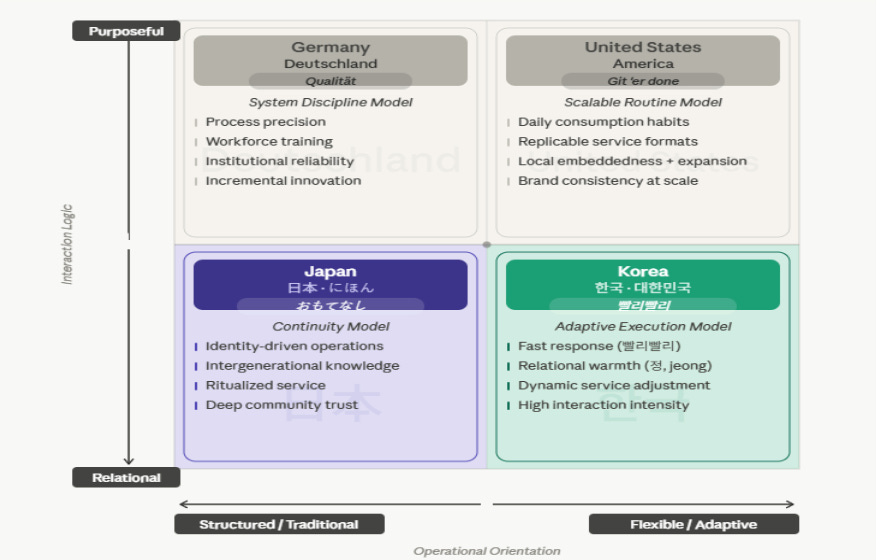
Figure 2. Enduring Food Service Models in the AI Era
Figure 2 presents this logic as a structured framework, mapping routine-based market diversity across two dimensions — human interaction logic and operational system orientation — and identifying four distinct pathways through which economies align cultural expectations, institutions, and operations to amplify individual habits into system-wide consumption patterns. By distinguishing relational versus system-mediated interactions and structured versus adaptive execution, the framework highlights how different configurations produce enduring advantage while converging on the same underlying principle: the disciplined alignment of routines and systems.
“In an AI-driven economy, the future of competitive advantage will belong not only to those who build AI — but to those who understand human routines.”
3. WHY AI CANNOT REPLICATE ROUTINE-EMBEDDED ADVANTAGE
AI systems are designed to optimize variability — detecting patterns, predicting behavior, and adapting to change. Routine-based systems operate differently: they reduce variability, stabilize behavior, and rely on repetition rather than novelty. This structural difference explains why routine-embedded advantage persists even as AI transforms adjacent domains.
3.1 Weekday Demand Concentration and Daylight Interaction
Routine-based consumption is most concentrated within the five-day workweek, drawing participation from workers, students, and mobile populations who regularly consume breakfast and lunch outside the home. Unlike dinner, which is often anchored within households on weekdays, morning and midday meals occur in public or semi-public spaces, expanding their reach across diverse demographic groups and positioning these businesses as integral to everyday economic activity rather than niche segments. These patterns are further reinforced by high-frequency repetition, as meals occur at similar times and locations, creating predictable traffic flows that allow firms to operate with steady throughput rather than irregular demand spikes.
Daylight activity amplifies both scope and scale by embedding breakfast and lunch within active hours of work, study, and mobility, often accompanied by functional social interactions such as brief meetings or casual exchanges. Over time, the accumulation of small, repeated transactions generates substantial aggregate demand, reinforcing long-term stability. By contrast, dinner consumption is more discretionary — typically home-centered during weekdays and shifting toward social or experiential occasions on evenings and weekends — resulting in narrower participation and less routine-driven frequency, despite higher per-occasion spending.
3.2 Affordability, Accessibility, and Routine-Embedded Engagement
Affordability is central to expanding the scope of routine-based consumption. Breakfast and lunch are typically priced to be accessible across a wide range of income groups, lowering barriers to frequent participation and sustaining demand even during economic uncertainty. Higher-priced dinner experiences, by contrast, tend to narrow participation and are more sensitive to economic cycles. Affordability also supports scale through repetition, encouraging multiple weekly purchases and shifting the economic model from maximizing per-transaction value to building cumulative demand through repeated visits.
Accessibility reinforces this dynamic by placing establishments near workplaces, transit hubs, and educational institutions, enabling customers to integrate meals seamlessly into daily routines with minimal friction. The combination of affordability and accessibility fosters routine-embedded engagement, where repeated interactions with familiar offerings reinforce organizational identity and deepen customer attachment over time.⁶ This creates a self-reinforcing cycle in which broad participation and high-frequency repetition strengthen one another, making routine-based consumption a durable and difficult-to-replicate source of advantage — because its value is anchored in stable human behavior rather than in data-driven optimization alone.
4. CASE ILLUSTRATIONS: ROUTINE-EMBEDDED BUSINESS MODELS IN PRACTICE
Building on the conceptual framework developed in Sections 2 and 3, the following cases illustrate how routine-embedded advantage operates in practice, particularly in contrast to AI-driven, platform-based models. Rather than focusing on global giants, the cases highlight locally grounded and nationally scaled firms whose success depends on aligning identity, routines, and operations. These examples demonstrate that endurance is not an abstract concept, but a set of observable practices embedded in everyday business activity.
4.1 United States: Scalable Habit Systems (Local to Regional Expansion)
Barry Bagels provides a clear illustration of how routine-based demand sustains a locally embedded business even amid platform competition. Rooted in Toledo, Ohio, the firm builds its advantage on fresh daily production, consistent quality, and strong community relationships, becoming a reliable part of customers’ morning routines.

Unlike delivery-driven models that emphasize convenience and aggregation, Barry Bagels relies on repeat in-person visits anchored in habitual timing and location, reinforcing customer loyalty through predictability rather than algorithmic recommendation. Its success reflects high-frequency engagement, where customers return not for novelty but because the offering fits seamlessly into their daily schedules.
A complementary national example is Waffle House, which achieves scale through standardized menus, 24-hour accessibility, and highly codified service routines that ensure consistency across locations. Together, these cases illustrate the American pathway of endurance through habit and scalable repetition, where success depends less on technological sophistication and more on the ability to expand while preserving the core rhythm of everyday consumption.
4.2 Japan: Continuity and Identity-Embedded Craft
Japan offers some of the most compelling examples of routine-based endurance, particularly among long-standing food establishments. A representative case is Toraya, a traditional confectionery firm with centuries of history, where daily production routines and customer interactions are deeply tied to cultural continuity. While not exclusively a breakfast provider, its operations reflect the same underlying principle: routine consumption reinforced through identity, craftsmanship, and ritualized service.
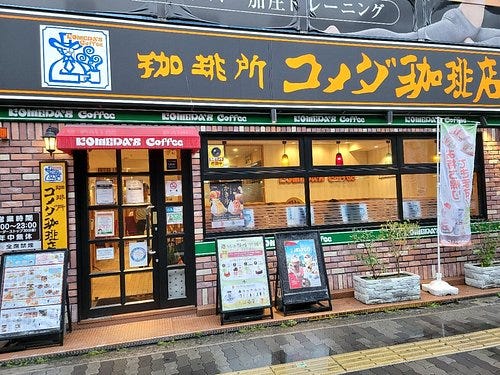
At a broader scale, Komeda’s Coffee demonstrates how traditional routines can expand nationally without losing cultural coherence. Originating in Nagoya, the chain has grown by preserving its distinctive café experience, consistent menu, and community-oriented atmosphere — with its morning set offerings embedding the brand into daily life. Together, these firms show that in Japan, endurance is achieved through continuity and identity preservation, where routines are not merely repeated but culturally reinforced and symbolically meaningful across generations.
4.3 Germany: System Discipline and Institutional Reliability
Germany’s food service sector reflects a system-driven model in which routines are sustained through process discipline and institutional structure. Well-established bakery chains such as Bäckerei Kamps — recognized nationally for their consistent quality and standardized operations — illustrate how daily bread and breakfast offerings are delivered through tightly coordinated production and distribution systems.
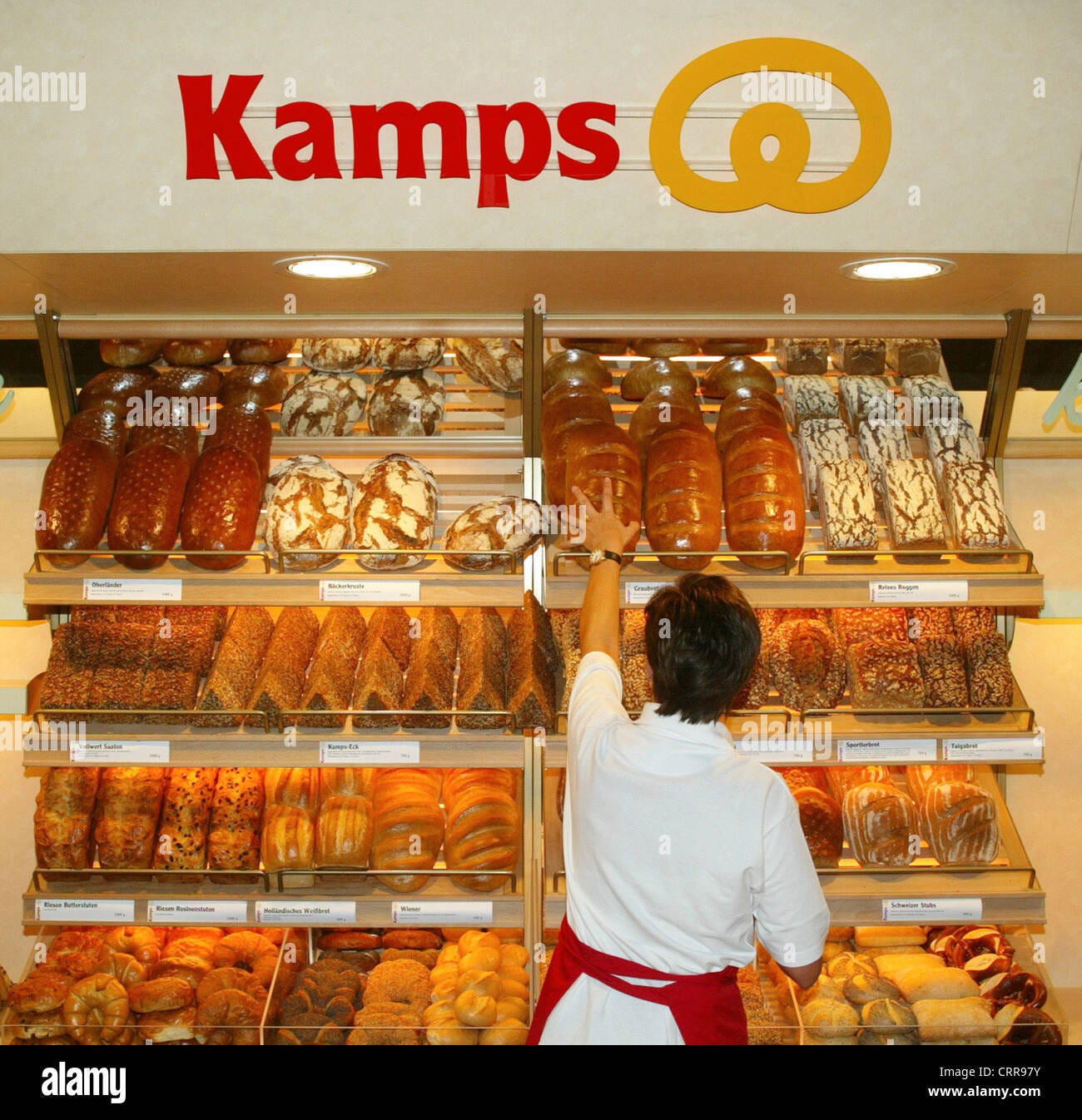
These firms rely on workforce training, process reliability, and supply chain integration to maintain uniform standards across locations. At a broader level, Nordsee, a long-standing seafood chain, demonstrates how structured systems can scale routine consumption across urban centers and transportation hubs while preserving predictable service and product consistency.
In this context, endurance emerges from system reliability rather than relational interaction. Customers place trust in the consistency of the system itself, where repetition is reinforced through disciplined, process-driven execution. The German model highlights how routine-based consumption is sustained through institutional strength and operational precision, embedding breakfast and lunch practices seamlessly into everyday urban life.
4.4 Korea: Adaptive Speed and Relational Intensity
Korea represents a dynamic model in which routines are sustained through speed, adaptability, and dense social interaction.
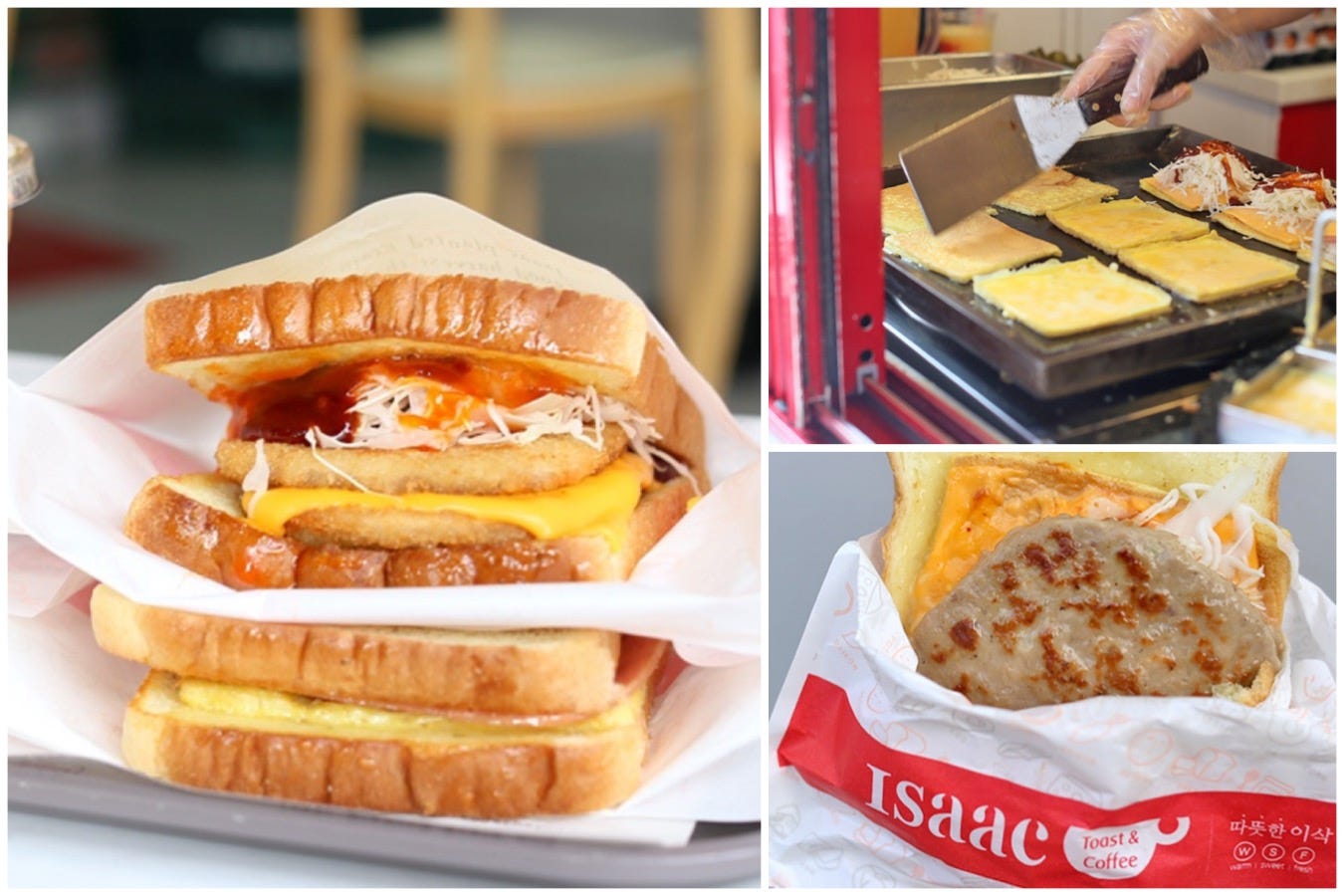
Isaac Toast, widely recognized across Korea as a popular and accessible breakfast chain, exemplifies how quick preparation, affordability, and high-frequency transactions align with fast-paced urban routines. Its strong presence in commuter-heavy areas reflects how breakfast consumption is closely integrated into daily mobility patterns.
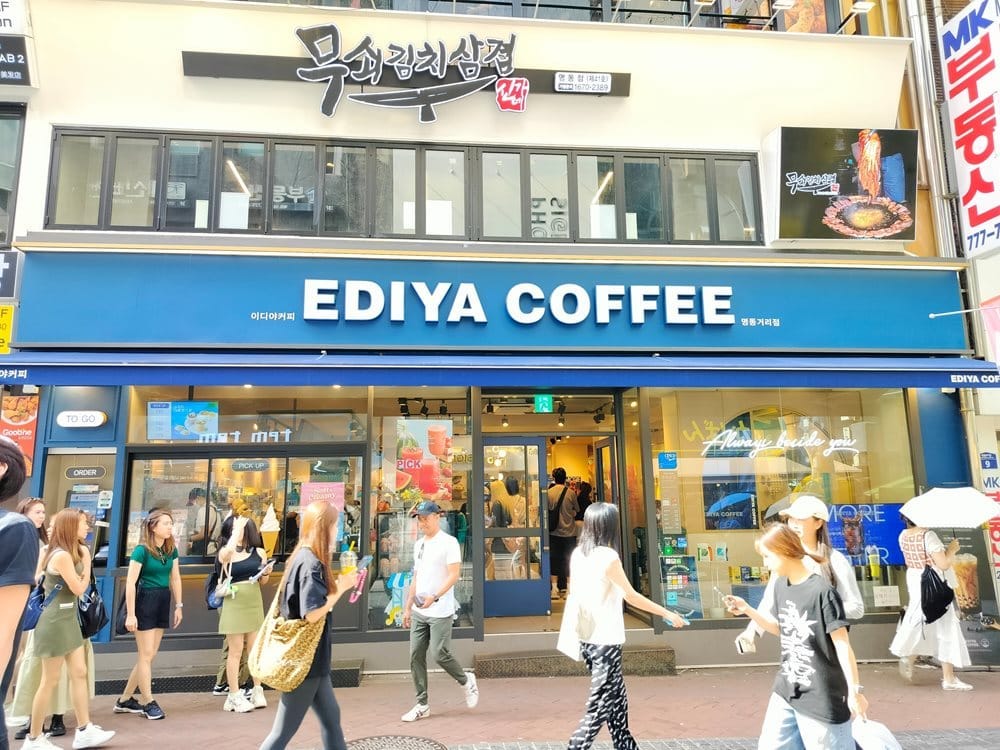
At a broader scale, Ediya Coffee — one of Korea’s largest and most widely distributed coffee chains — demonstrates how routine consumption expands through a balance of operational efficiency and everyday accessibility, supported by dense store networks and consistent pricing.
These firms illustrate Korea’s distinctive pathway of endurance through adaptive responsiveness. Routines are continuously adjusted to evolving urban conditions, reinforced by fast service and frequent customer interaction. The result is a high-intensity consumption system in which both scope and scale are amplified through speed, accessibility, and socially embedded engagement.
“In an AI-driven world, the most enduring businesses are not those that scale intelligence — but those that sustain human routines.”
5. CONCLUSION
The analysis shows that the resilience of breakfast and lunch businesses in the AI era is structurally grounded in human routines and their alignment with operational systems. Across the United States, Japan, Germany, and Korea, firms follow different pathways — scalable habits, continuity, system discipline, and adaptive responsiveness — yet converge on embedding their offerings into everyday life, where routine-based demand remains stable, repeatable, and widely shared. As these patterns suggest, routine-based demand is not displaced by artificial intelligence but instead provides a stable foundation upon which digital capabilities can be layered and extended.⁷ This interplay between enduring human behavior and evolving technological systems clarifies where sustainable advantage ultimately resides in the AI era. While AI enhances efficiency and coordination, it does not replace the human behaviors that sustain these routines. Enduring advantage lies in integrating technology with habit, trust, and human interaction.
Notes
Brynjolfsson, E., & McAfee, A. (2014). The second machine age: Work, progress, and prosperity in a time of brilliant technologies. W. W. Norton & Company.
Collins, J. C., & Porras, J. I. (1994). Built to last: Successful habits of visionary companies. HarperBusiness.
North, D. C. (1990). Institutions, institutional change and economic performance. Cambridge University Press.
Teikoku Databank. (2023). Teikoku Databank special report: Long-lived companies in Japan. Teikoku Databank, Ltd. https://www.tdb.co.jp
Wood, W., & Neal, D. T. (2007). A new look at habits and the habit–goal interface. Psychological Review, 114(4), 843–863. https://doi.org/10.1037/0033-295X.114.4.843
Gioia, D. A., Patvardhan, S. D., Hamilton, A. L., & Corley, K. G. (2013). Organizational identity formation and change. Academy of Management Annals, 7(1), 123–193. https://doi.org/10.5465/19416520.2013.762225
Davenport, T. H., & Ronanki, R. (2018). Artificial intelligence for the real world. Harvard Business Review, 96(1), 108–116.
Original Document:

ABOUT THE AUTHOR

Paul C. Hong DISTINGUISHED UNIVERSITY PROFESSOR · UNIVERSITY OF TOLEDO
Paul C. Hong is a Distinguished University Professor and Chair of Information Systems and Supply Chain Management at the University of Toledo. His work focuses on leadership, governance, and decision-making in the AI era, integrating strategy, technology, and institutional trust. He has published extensively in leading academic journals and writes on how individuals and organizations navigate complexity, disruption, and global transformation.
K-GSP Forum · Leadership & Governance Research · April 2026
© K-Global Scholars and Professionals Forum. All rights reserved. Content published in the K-GSP Forum may not be reproduced, distributed, or transmitted in any form without prior written permission from the K-GSP Forum, except for brief quotations with full attribution.
This was a deeply insightful piece. What stood out to me most is the idea that some parts of human life—like breakfast—are not just about efficiency, but about rhythm, presence, and relationship. In a world increasingly shaped by AI and scale, it’s striking that something so ordinary continues to resist disruption.
It also made me reflect on how much of our daily life is built on trust and familiarity rather than optimization. The local breakfast ecosystem is not just about food—it’s about community, consistency, and quiet human connection.
In many ways, this feels like a reminder that not everything valuable can be automated or replaced. Some things endure because they meet deeper human needs.
Thank you for such a meaningful and thought-provoking perspective.
Thank you for your interesting article to read!