

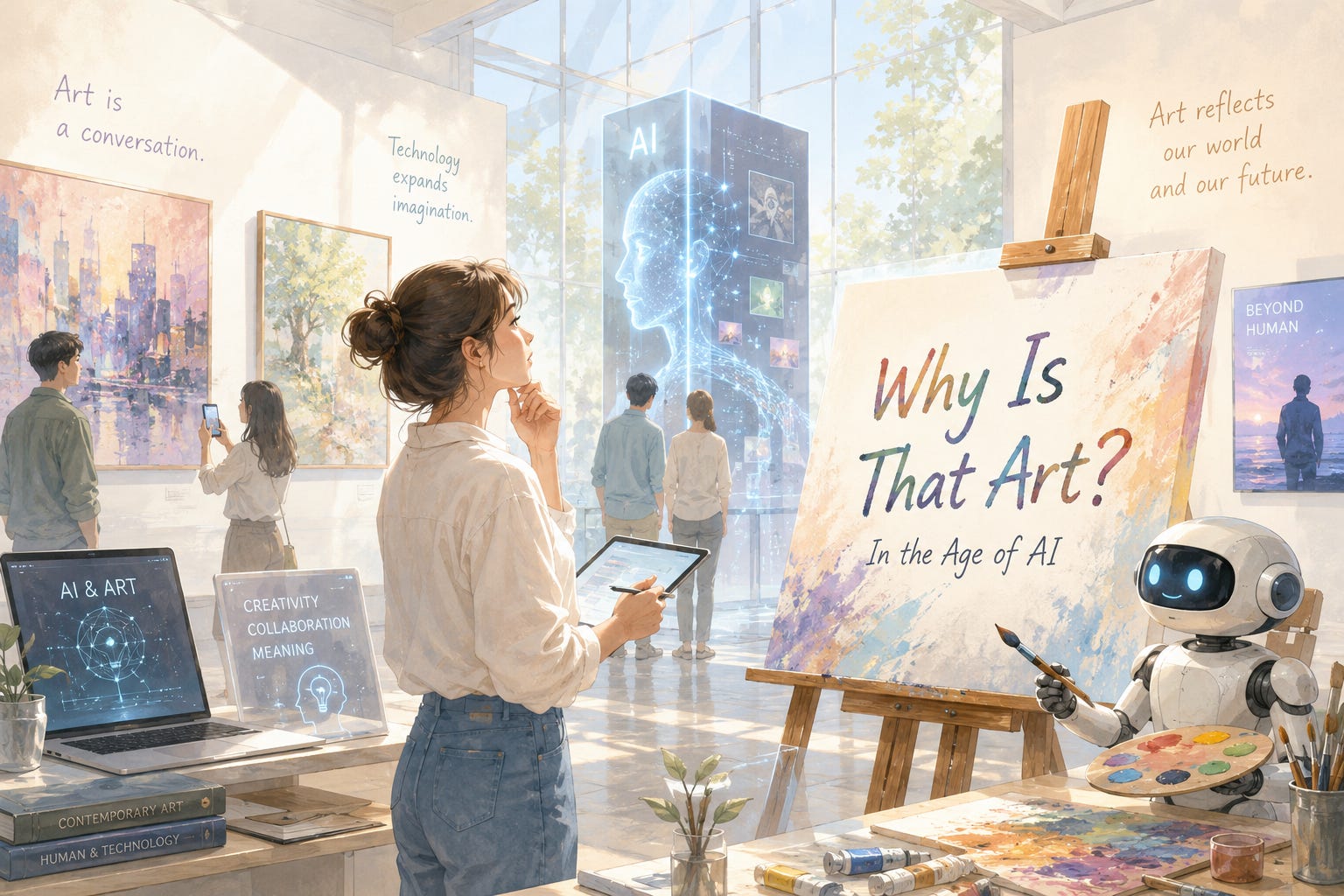
A visitor stands before a work of art in a museum and is surprised to learn that the beautiful landscape, rich in detail and color, was not painted by a human artist but generated by artificial intelligence (AI). Only a few years ago, art was widely regarded as a uniquely human form of creative expression. Today, however, AI can create paintings, compose music, write poetry, and even generate scenes for films. In this rapidly changing environment, we are compelled to ask once again, “Why is that art?” Along with this question comes another equally important one: “Who is the artist?”
Traditionally, art was evaluated largely through the lens of human skill and craftsmanship. The mastery of a painter’s brushstroke or a sculptor’s chisel was considered central to artistic achievement. Contemporary art, however, has gradually shifted its focus from technique to ideas and meaning. What matters most is often not how a work is made, but what it communicates and how it engages with society. AI-generated art emerges directly from this evolution in artistic thinking.
Today, generative AI has become more than a mere tool; it is increasingly viewed as a creative partner. Artists provide prompts, guide the process, and select from countless generated outputs to shape meaningful works. In this context, the artist is no longer simply someone who paints or sculpts by hand, but someone who designs, curates, and directs the creative process. This role resembles that of an orchestra conductor who creates a musical vision without personally playing every instrument.
When confronted with AI-generated artworks, many people wonder whether human artists are becoming obsolete. Yet AI possesses no independent purpose or intention. It operates based on data and instructions provided by humans. The responsibility for assigning meaning, determining value, and expressing messages about society and humanity remains firmly in human hands. AI may assist in creation, but humans continue to define what makes art significant.
One of the defining characteristics of contemporary art is the active participation of the audience. AI technologies are expanding this trend even further. Viewers can now interact directly with creative systems, generating images through dialogue with AI or experiencing artworks that evolve according to their responses. Art is increasingly becoming a dynamic process rather than a static object, transforming spectators into participants.
AI-generated art also challenges our understanding of creativity itself. For centuries, creativity was considered an exclusively human trait. Yet as AI produces remarkably original and compelling images, we are forced to reconsider what creativity truly means. Perhaps creativity is not merely the ability to generate something new, but the capacity to assign meaning, inspire reflection, and create cultural value.
At the same time, AI art raises important ethical questions. AI systems are trained on vast collections of existing works. How should the rights of original creators be protected? Who owns the copyright of an artwork generated by AI? These questions extend beyond legal concerns and touch upon deeper issues regarding the value of human creativity and artistic integrity.
Many contemporary artists are not only using AI as a medium but also making AI itself the subject of artistic inquiry. Issues such as algorithmic bias, digital surveillance, misinformation, and the evolving relationship between humans and machines have become major themes in contemporary art. Rather than simply celebrating technological progress, artists use their work to critically examine its consequences and implications for society.
The rise of generative AI is also contributing to the democratization of artistic creation. Activities that once required years of training and technical expertise are now accessible to a broader audience. Students, professionals, retirees, and hobbyists alike can transform their ideas into visual form. As a result, the barriers to artistic participation are lower than ever before, enabling more people to experience the joy of creation.
Education is evolving alongside these changes. The art education of the future will likely place greater emphasis on creative thinking, critical analysis, storytelling, and ethical reasoning than on technical skill alone. Students will learn how to collaborate with AI systems, using them to expand their imagination and explore new modes of expression. Art education is becoming a process of learning how humans and intelligent technologies can create together.
The age of AI does not represent a competition between humans and machines. Rather, it marks the emergence of a new form of collaboration. AI offers an abundance of possibilities, but it is human judgment that determines which possibilities are meaningful and worthwhile. As technology advances, uniquely human qualities such as imagination, empathy, ethical reflection, and storytelling become even more valuable.
Ultimately, the question “Why is that art?” remains as relevant as ever in the age of AI. Indeed, its importance has only grown. Art is not merely a finished product; it is a process through which human beings seek to understand the world and express their experiences. No matter how sophisticated AI becomes, the heart of art continues to lie in humanity’s search for meaning, connection, and self-understanding.
For this reason, the rise of AI in the arts should not be viewed as the end of human creativity. Instead, it may represent the beginning of a new Renaissance—one in which human imagination and artificial intelligence work together to expand the boundaries of artistic expression and redefine what art can be in the twenty-first century. +++
{Solti}
June 16, 2026
AI 시대, 왜 이것이 예술인가?
인공지능과 현대미술이 함께 만들어 가는 새로운 창조의 세계
미술관에서 한 작품 앞에 선 관람객이 놀란다. 아름다운 풍경과 섬세한 색채가 담긴 그림이 알고 보니 화가가 아닌 인공지능(AI)에 의해 만들어졌다는 사실을 알게 되었기 때문이다. 불과 몇 년 전만 해도 예술은 인간만이 할 수 있는 창조적 활동으로 여겨졌다. 그러나 오늘날 AI는 그림을 그리고, 음악을 작곡하며, 시를 쓰고, 영화의 장면까지 생성하고 있다. 이러한 변화 속에서 우리는 다시 묻게 된다. “왜 이것이 예술인가?” 그리고 “예술가는 누구인가?”라는 새로운 질문도 함께 등장한다.
과거의 예술은 주로 인간의 손기술과 표현 능력을 중심으로 평가되었다. 뛰어난 화가의 붓놀림과 조각가의 정교한 손길은 예술의 핵심 요소였다. 하지만 현대미술은 이미 오래전부터 예술의 본질을 기술이 아닌 아이디어와 의미에서 찾기 시작했다. 작품의 외형보다 그것이 전달하는 메시지와 사회적 의미가 더 중요해진 것이다. AI 예술 역시 이러한 현대미술의 흐름 위에서 등장했다.
오늘날 생성형 AI는 단순한 도구를 넘어 새로운 창작 파트너로 자리 잡고 있다. 예술가는 AI에게 명령어를 입력하고, 수많은 결과물 가운데 의미 있는 작품을 선택하고 다듬는다. 이러한 과정에서 예술가는 붓을 들고 그림을 그리는 사람이 아니라 창작 과정을 설계하고 방향을 제시하는 창의적 감독의 역할을 수행한다. 마치 오케스트라 지휘자가 직접 모든 악기를 연주하지 않더라도 음악 전체를 창조하는 것과 비슷하다.
AI가 만든 작품을 바라보면서 사람들은 종종 “그렇다면 인간 예술가는 필요 없는 것 아닌가?”라고 묻는다. 그러나 AI는 스스로 목적을 갖지 못한다. AI는 인간이 제공한 데이터와 명령에 따라 작동할 뿐이다. 작품에 의미를 부여하고, 무엇이 가치 있는지 판단하며, 사회와 인간에 대한 메시지를 담아내는 것은 여전히 인간의 몫이다. AI는 창작을 돕는 도구일 수 있지만 예술의 의미를 결정하는 주체는 인간이다.
최근 현대미술의 중요한 특징 가운데 하나는 관람자의 적극적인 참여이다. AI 기술은 이러한 경향을 더욱 확대하고 있다. 관람객은 단순히 작품을 감상하는 것을 넘어 작품 생성 과정에 직접 참여할 수 있다. AI와 대화를 나누며 이미지를 만들고, 자신의 선택에 따라 변화하는 디지털 작품을 경험한다. 예술은 더 이상 완성된 결과물이 아니라 끊임없이 진화하는 과정이 되고 있다.
AI 예술은 창의성에 대한 우리의 생각도 바꾸고 있다. 오랫동안 창의성은 인간만의 독특한 능력으로 여겨졌다. 그러나 AI가 놀라울 정도로 독창적인 이미지를 생성하는 모습을 보면서 우리는 창의성이 무엇인지 다시 생각하게 된다. 창의성은 단순히 새로운 것을 만드는 능력이 아니라, 새로운 것에 의미를 부여하고 사회적 가치를 창출하는 능력일지도 모른다.
동시에 AI 예술은 여러 윤리적 문제를 제기한다. AI는 수많은 기존 작품을 학습하여 새로운 이미지를 생성한다. 그렇다면 원작자의 권리는 어떻게 보호되어야 하는가? AI가 만든 작품의 저작권은 누구에게 귀속되는가? 이러한 문제는 단순한 법적 논쟁을 넘어 인간 창작의 가치와 존엄성에 대한 중요한 질문으로 이어진다.
현대 예술가들은 AI를 단순히 활용하는 데 그치지 않고, AI 자체를 예술적 탐구의 대상으로 삼고 있다. 알고리즘의 편향성, 데이터 감시 사회, 가짜 정보, 인간과 기계의 관계 같은 문제들이 새로운 예술 작품의 주제가 되고 있다. 예술은 기술을 찬양하기보다 기술이 가져올 미래를 비판적으로 성찰하는 역할을 수행하고 있다.
특히 생성형 AI의 발전은 예술의 민주화를 촉진하고 있다. 과거에는 전문적인 기술과 오랜 훈련이 필요했던 창작 활동이 이제는 누구에게나 열려 있다. 어린 학생부터 은퇴한 노인까지 누구나 자신의 상상력을 시각화할 수 있다. 이는 예술의 문턱을 낮추고 더 많은 사람들이 창작의 기쁨을 경험하게 만든다.
교육 분야에서도 변화가 일어나고 있다. 미래의 예술 교육은 단순한 기술 습득보다 창의적 사고와 비판적 분석 능력을 더욱 중요하게 여길 것이다. 학생들은 AI를 활용하여 아이디어를 확장하고 새로운 표현 방식을 탐구하게 된다. 예술 교육은 인간과 기술이 협력하는 방법을 배우는 과정으로 발전하고 있다.
AI 시대의 예술은 인간과 기계의 경쟁이 아니다. 그것은 새로운 협업의 형태이다. AI는 무한한 가능성을 제공하지만, 그 가능성 속에서 무엇이 의미 있는지 선택하는 것은 인간이다. 기술이 발전할수록 오히려 인간의 상상력, 공감 능력, 윤리적 판단, 그리고 스토리텔링 능력은 더욱 중요한 가치가 된다.
결국 “왜 이것이 예술인가?”라는 질문은 AI 시대에도 여전히 유효하다. 오히려 그 중요성은 더욱 커지고 있다. 예술은 단순한 결과물이 아니라 인간이 세상을 이해하고 자신을 표현하는 과정이다. AI가 아무리 발전하더라도 예술의 중심에는 인간의 경험과 감정, 그리고 의미를 찾으려는 끊임없는 탐구가 존재한다. 따라서 AI 시대의 예술은 인간성의 종말이 아니라, 인간 창의성의 새로운 르네상스를 보여 주는 중요한 문화적 전환점이라고 할 수 있다. +++
{솔티}
2026년 6월 16일

Young Choi, a Professor at Regent University brings a rare combination of technical expertise and creative spirit to everything he does. A scholar in AI, cybersecurity, and network & telecommunications service management, he has published 38 books on AI, cybersecurity, and various topics, over 200 refereed research papers, and 20 book chapters. He proposed the world’s first global and universal Telecommunications “Service Order Handling (SOH)” Model (T-SOH Model) in 1995 with Dr. Adrian Tang. Beyond the academy, Dr. Choi is a passionate poet, essayist, calligrapher, and laser engraving artist whose reflective writing invites readers to rediscover life’s beauty through quiet contemplation(靜觀). He lives under the motto: “Study hard and give generously without holding back! (열심히 공부해서 아낌없이 남주자 !: 열공아남!)”
Published books: https://www.amazon.com/stores/Young-Choi/author/B0DMZ5S6R7?ref=ap_rdr&shoppingPortalEnabled=true