

EXECUTIVE SUMMARY
This article examines how BTS’s recent decision not to submit its work for the 2027 Grammy Awards reflects a broader transformation of the global music supply chain from a linear, gatekeeper-driven structure toward a networked ecosystem of artists, platforms, entertainment firms, fandoms, and recognition institutions. It develops the concept of geo-econo-techno-cultural transformation to explain how shifting geographic influence, new economic models, digital technologies, and transnational cultural participation are redistributing value creation and legitimacy across the music industry. The article argues that future competitiveness will depend increasingly on ecosystem synergy: how effectively artists, firms, platforms, institutions, and global fan communities coordinate creativity, technology, market reach, and cultural authenticity.
Keywords: Global music supply chain; BTS; Geo-econo-techno-cultural transformation; Platform–fandom ecosystem; Ecosystem synergy
1. Introduction
When my two daughters attended BTS’s recent Chicago performance, they described it as an unforgettable experience, not simply because of the music, but because of the scale, diversity, energy, and sense of global community surrounding the event. The experience was so meaningful that one daughter later decided to take her mother and her two children to a BTS performance in Los Angeles, turning what began as a concert experience into a three-generation family event. This intergenerational participation was especially striking when contrasted with my daughters’ high school years, when Korean food, Korean popular culture, and even Korea itself were far less visible in mainstream American life and were often regarded as unfamiliar or distinctly foreign. Today, Korean food is widely consumed, Korean films and dramas attract global audiences, and BTS can fill major venues with fans who cross national, linguistic, racial, and generational boundaries. For our family, the movement from Chicago to Los Angeles vividly illustrates how dramatically Korea’s cultural and economic position has changed within a single generation, and how Korean popular culture now connects three generations of our own family.
Against this backdrop, BTS’s announced decision not to submit its comeback album ARIRANG or related tracks for consideration at the 2027 Grammy Awards represents more than withdrawal from an awards competition (Associated Press, 2026). Coming shortly after the Recording Academy introduced the new Best Asian Pop Music Performance category for the 2027 Grammys, the decision raised a broader question about how globally successful artists should be recognized when their music, audiences, production networks, and cultural influence increasingly transcend national and linguistic boundaries (Recording Academy, 2026). The issue therefore extends beyond BTS and the Grammys to the changing architecture of the global music supply chain ecosystem, the interconnected network through which music is created, financed, produced, distributed, promoted, consumed, evaluated, and culturally legitimized.
In the traditional music supply chain, record labels, broadcasters, physical distributors, critics, and major Western award institutions occupied powerful gatekeeping positions. In the emerging ecosystem, however, artists can connect directly with worldwide listeners through digital platforms, social media, streaming services, international concerts, online communities, and highly organized fandom networks. This shift reflects what this article defines as a geo-econo-techno-cultural transformation: the mutually reinforcing restructuring of geographic influence, economic value creation, technological infrastructure, and cultural exchange. Geographically, musical influence is becoming more multipolar; economically, value increasingly comes from streaming, intellectual property, concerts, merchandise, and partnerships; technologically, digital platforms and AI accelerate global circulation; and culturally, audiences increasingly embrace multilingual lyrics, hybrid genres, and transnational identities (Hesmondhalgh & Meier, 2018; Oh & Park, 2012; International Federation of the Phonographic Industry, 2026).
From this perspective, BTS’s Grammy decision may be interpreted not simply as rejection or protest, but as an indication of changing power relationships within the global music ecosystem. Artists and fandom communities are gaining influence relative to traditional institutions, while cultural products once viewed as peripheral are increasingly shaping mainstream global consumption. The central issue is no longer merely whether K-pop can be accepted within the established global music industry, but whether established institutions can adapt to a world in which music is produced locally, coordinated globally, distributed digitally, and valued collectively by border-spanning communities. This article therefore uses BTS as a point of departure for examining how geo-economic shifts, technological platforms, cultural hybridity, and networked fandom are reshaping the structure, governance, and future direction of the global music supply chain ecosystem (Adner, 2017; Moore, 1993; Vargo & Lusch, 2004).
2. Contextual Overview
The global music industry is shifting from a linear, gatekeeper-controlled supply chain toward an interconnected ecosystem of artists, platforms, technology firms, and fandom communities, a transition captured by geo-econo-techno-cultural transformation, in which geographic influence, economic value, technological infrastructure, and cultural exchange increasingly reinforce one another, with BTS’s 2027 Grammy decision serving as a visible expression of this broader restructuring of how global music is created, distributed, valued, and recognized (Adner, 2017; Jin, 2016; Kim, 2013).
2.1. From a Linear Music Supply Chain to a Networked Ecosystem
The traditional global music supply chain was largely linear and hierarchical, with artists, record labels, manufacturers, distributors, broadcasters, retailers, and award institutions occupying sequential roles and controlling access to visibility and legitimacy. Digitalization has transformed this structure into a networked ecosystem in which artists can release music through streaming platforms, communicate directly with audiences through social media, sell merchandise digitally, and build global followings without relying exclusively on traditional intermediaries. Production, promotion, distribution, consumption, and feedback now occur simultaneously through interconnected platforms involving entertainment firms, technology providers, concert operators, advertisers, brand partners, and organized fandoms. As a result, consumers have become active participants who translate, circulate, recommend, purchase, and promote music, turning the supply chain into a collaborative ecosystem in which artists, firms, platforms, and fans jointly create global reach and cultural value (Moore, 1993; Adner, 2017; Hesmondhalgh & Meier, 2018; Vargo & Lusch, 2004).
2.2. Geo-Economic Rebalancing and the Rise of Multiple Music Centers
The Recording Academy’s introduction of the Best Asian Pop Music Performance category for the 2027 Grammy Awards formally recognizes Asian pop performances, including K-pop, J-pop, and C-pop. Importantly, the Academy specifies that eligibility is determined by musical style and meaningful use of one or more Asian languages, not by the ethnicity or nationality of the performers, and recordings that do not fit this category may remain eligible in other appropriate categories (Recording Academy, 2026). Even with this clarification, the creation of a regionally identified category raises a broader question about how global recognition systems balance greater inclusion with the risk of reinforcing geographic or linguistic boundaries. BTS’s decision not to submit ARIRANG or related tracks therefore invites consideration of whether globally competitive artists should increasingly be evaluated across principal categories as well as within culturally or regionally defined ones (Associated Press, 2026; Jin, 2016; Kim, 2013; Hong et al., 2024).
2.3. Technology, Fandom, and the Redistribution of Industry Power
Technology provides the infrastructure for the emerging global music supply chain ecosystem by linking streaming, video platforms, social media, algorithms, mobile connectivity, artificial intelligence, digital commerce, and virtual experiences across production, promotion, consumption, and monetization. These technologies have also expanded music’s economic architecture beyond album sales toward streaming, concerts, merchandise, subscriptions, licensing, gaming, films, brand collaborations, and other intellectual-property extensions. Most importantly, digitalization has transformed fandom into an active supply chain capability, as BTS’s ARMY demonstrates through translation, promotion, purchasing, community organization, information sharing, and reputation building across national boundaries. The resulting ecosystem redistributes power among artists, entertainment companies, platforms, fandoms, and established institutions, making the central question not whether traditional awards remain relevant, but whether they can adapt to a world in which cultural value and market legitimacy are increasingly created through networked global participation (Bollmer & Tillerson, 2025; Nam et al., 2024; Park et al., 2025).
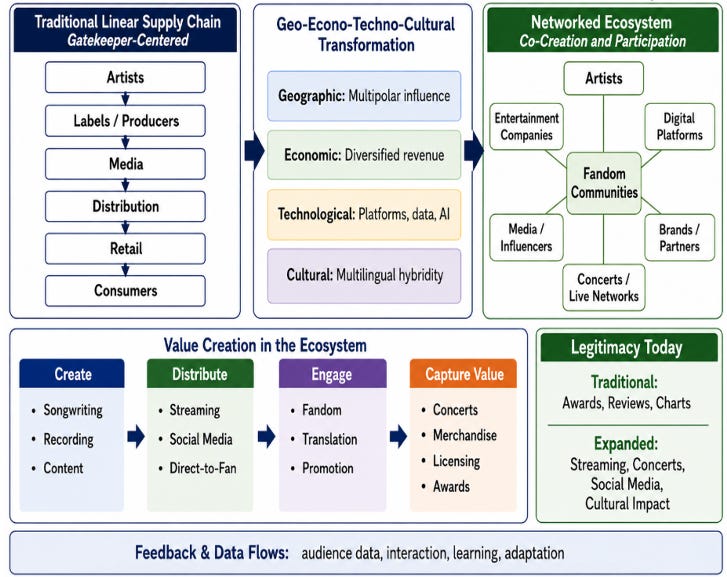
Figure 1. Changing Dynamics of the Global Music Supply Chain Ecosystem
Source: Author’s Own Compilation
Figure 1 illustrates the transformation of the global music supply chain from a traditional linear, gatekeeper-centered model toward a networked ecosystem characterized by co-creation, participation, and multidimensional legitimacy. It shows how the geo-econo-techno-cultural transformation links geographic diversification, new economic models, digital technologies, and cultural hybridity with a broader network of artists, entertainment companies, digital platforms, fandom communities, media, brands, and concert networks. The figure also highlights how value creation now moves through interconnected activities involving creation and production, organizational development, distribution and platforms, fan engagement, monetization, and recognition, supported by continuous feedback, data, learning, and adaptation. Overall, it emphasizes that legitimacy and competitive advantage are increasingly generated through ecosystem synergy and multiple indicators of global relevance rather than through a single institutional gatekeeper.
Changing Industry Logic: Global music is shifting from gatekeeper-controlled supply chains to networked ecosystems of artists, platforms, firms, and fandoms.
3. Changing Trends in the Global Music Supply Chain Ecosystem
The global music supply chain ecosystem is shifting from centralized gatekeeping toward coordinated networks of artists, firms, platforms, brands, concert promoters, and transnational fandoms, with BTS illustrating how Korean creative capabilities, worldwide digital distribution, engaged fans, and multiple forms of recognition can jointly generate global influence, while the broader geo-econo-techno-cultural transformation is reconfiguring value creation through distributed networks, platform–fandom integration, and increasingly multidimensional systems of legitimacy (Hong, 2026; Hong et al., 2024; IFPI, 2026).
3.1. From Centralized Gatekeeping to Distributed Value Creation
The first major trend is the movement from centralized industry control toward distributed value creation, as major labels, broadcasters, distributors, critics, and award institutions no longer monopolize the critical pathways to market access and legitimacy. In the contemporary ecosystem, entertainment companies operate alongside streaming services, social-media platforms, concert networks, brand partners, and fandom communities that jointly contribute production, promotion, distribution, translation, market intelligence, and reputational support. BTS demonstrates this network logic, with global success emerging from the coordinated capabilities of artists, producers, choreographers, platforms, touring partners, merchandise systems, brands, and ARMY communities rather than from any single organization. As a result, artists gain greater direct influence over audiences and brand development, even as power asymmetries persist through dependence on platforms, algorithms, contracts, intellectual-property systems, and large-scale production networks (Adner, 2017; Moore, 1993; Oh & Park, 2012).
3.2. Platform–Fandom Integration as a New Supply Chain Capability
The second major trend is the integration of digital platforms and fandom communities into the operating core of the global music supply chain, transforming audiences from passive consumers into active participants in promotion, distribution, interpretation, and reputation building. Streaming services, video platforms, social media, recommendation algorithms, and fan-based digital networks enable communities to coordinate translations, streaming campaigns, voting, charitable activities, and concert participation while accelerating international diffusion and sustaining engagement. BTS and ARMY illustrate this platform–fandom integration particularly clearly, as fans have expanded the group’s global reach, introduced its music across languages and markets, and connected musical participation with social causes and community identity. For music firms, the managerial challenge is therefore to treat fandom as an ecosystem partnership built on authenticity, transparency, reciprocal communication, and voluntary participation, because long-term value depends not merely on audience size but on the strength and durability of artist–fan relationships (Bollmer & Tillerson, 2025; Nam et al., 2024; Park et al., 2025).
3.3. From Institutional Recognition to Multiple Forms of Global Legitimacy
The third major trend is the movement from a single dominant recognition system toward multiple sources of legitimacy, as awards, critical reviews, radio exposure, and chart rankings increasingly coexist with streaming performance, concert demand, social-media engagement, global fandom, cultural influence, brand partnerships, and intellectual-property value. BTS’s decision not to submit its recent work for the 2027 Grammy Awards illustrates this shift by suggesting that globally established artists may possess sufficient audience support, market power, and cultural influence to define success beyond a single institutional platform. Traditional awards remain important sources of prestige and historical recognition, but they now face the challenge of adapting categories, voting systems, and evaluative frameworks to the broader geo-econo-techno-cultural transformation of music. The future of global recognition will therefore depend on balancing inclusion with integration: expanding meaningful visibility for underrepresented musical traditions while also ensuring that globally successful artists retain opportunities for recognition across broader categories and boundaries (Associated Press, 2026; Recording Academy, 2026; IFPI, 2026; Hesmondhalgh & Meier, 2018).
4. Discussion: Historical Perspective, Future Prospects, and Ecosystem Synergy
The transformation of the global music supply chain ecosystem can be understood most clearly by connecting its historical development, present restructuring, and future possibilities. The industry did not move directly from physical albums to streaming platforms; it evolved through successive changes in recording technology, distribution systems, media institutions, consumer behavior, and international cultural exchange. Each stage altered who controlled access, how value was created, and which artists could reach global audiences. BTS’s recent Grammy-related decision is therefore best interpreted within this longer historical movement rather than as an isolated response to one award institution.
The discussion also requires a prospective view. The future of global music will be shaped by the interaction of artists, entertainment companies, platforms, artificial intelligence, concert networks, brands, governments, and fandom communities. No single participant will control the entire ecosystem, and no artist or firm will succeed globally through individual capabilities alone. The central challenge will be to transform increasing complexity into productive synergy while preserving artistic creativity, cultural authenticity, economic fairness, and long-term trust.
4.1. Historical Perspective: From Physical Control to Digital Connectivity
The modern music industry has evolved through repeated shifts in control, from an era dominated by recording facilities, physical manufacturing, radio, retail distribution, and major-label financing toward increasingly digital forms of production and market access. Television, cassette tapes, compact discs, and global media corporations expanded international circulation but largely preserved Western-centered gatekeeping through radio programming, retail access, major-label promotion, and award recognition. The internet, streaming platforms, social media, and digital distribution disrupted this structure by lowering entry barriers and enabling artists from previously peripheral markets, including K-pop performers such as BTS, to reach global audiences more directly. Historical change therefore reflects both continuity and transformation: traditional intermediaries remain influential, but they now operate within a broader ecosystem in which platforms, data, direct artist communication, and globally organized fandom increasingly shape visibility, value creation, and legitimacy (Hesmondhalgh & Meier, 2018; Jin, 2016; Kim, 2013; Hong, 2026).
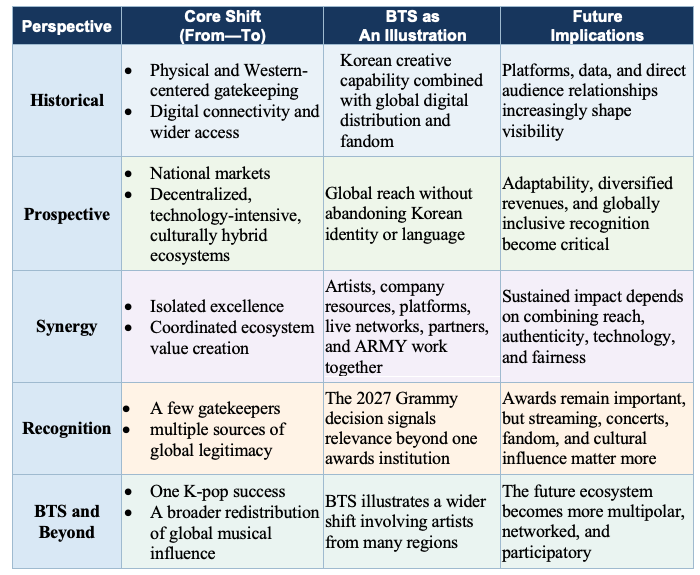
Table 1. The Future Global Music Ecosystem
Source: Author’s Own Compilation
Table 1 presents five perspectives, showing the core industry shift, how BTS illustrates that shift, and the principal implication for the future global music ecosystem. Across the five perspectives, the common direction is from concentrated gatekeeping toward a more multipolar, networked, participatory, and ecosystem-based model of value creation and legitimacy.
4.2. Prospective Perspective: The Future Architecture of Global Music
The future global music ecosystem will become more decentralized, technologically intensive, and culturally hybrid as artists, producers, and creative teams collaborate across national, linguistic, and genre boundaries. Artificial intelligence will increasingly support composition, production, translation, recommendation, audience analysis, and virtual experiences, while also raising significant questions concerning copyright, ownership, authenticity, employment, and fair compensation. Economic value will continue to diversify beyond streaming into concerts, merchandise, subscriptions, licensing, gaming, brand partnerships, and other intellectual-property extensions, increasing the importance of coordinated ecosystem relationships. At the same time, award institutions, charts, and media organizations will face growing pressure to recognize cultural distinctiveness while also creating opportunities for globally successful artists to receive recognition across broader regional, linguistic, and genre boundaries (IFPI, 2026; Hesmondhalgh & Meier, 2018).
4.3. Synergy Perspective: Achieving More Through Strategic Ecosystem Relationships
The deepest implication of the changing global music supply chain is that worldwide impact increasingly results from synergy among artistic talent, production capability, digital distribution, commercial partnerships, live performance, cultural interpretation, and audience participation rather than from isolated excellence. BTS illustrates this principle through the synchronization of member capabilities, company resources, streaming and media platforms, concert networks, translators, global partners, and ARMY communities across geographic and cultural boundaries. This synergy operates across individual, team, firm, industry, national, and international levels, but sustainable value creation also requires fairness, transparency, creative integrity, appropriate compensation, and balanced value distribution among ecosystem participants. Taken together, the historical, prospective, and synergy perspectives suggest that the future of global music will depend less on competition between artists and gatekeepers, East and West, or platforms and labels than on building relationships that combine global reach with cultural authenticity, technological innovation with human creativity, and commercial success with equitable recognition (Adner, 2017; Vargo & Lusch, 2004; Bollmer & Tillerson, 2025; Nam et al., 2024).
Future Competitive Logic: Global influence increasingly depends on ecosystem synergy—combining cultural authenticity, digital connectivity, fan participation, and multidimensional legitimacy.
5. Conclusion
Our family’s experiences at BTS performances in Chicago and Los Angeles, culminating in a three-generation outing involving a grandmother, her daughter, and two grandchildren, capture how music can now connect generations, cultures, and places in ways that would have seemed unlikely only a generation ago. BTS’s decision not to submit its work for the 2027 Grammy Awards similarly points beyond one artist or award cycle toward a global music supply chain ecosystem in which legitimacy is increasingly created through worldwide audiences, digital platforms, transnational fandoms, and networked value creation rather than exclusively through traditional gatekeepers. Prospectively, the continuing geo-econo-techno-cultural transformation will create new centers of musical influence, technologies, revenue models, cultural combinations, and forms of recognition, while BTS’s future trajectory may represent only one prominent example of a much larger movement involving artists from Asia, Latin America, Africa, India, and beyond. The future of global music will depend on ecosystem synergy: the capacity of artists, firms, platforms, institutions, nations, and multigenerational fan communities to combine technological innovation with human creativity, global reach with cultural authenticity, and commercial opportunity with equitable recognition and shared value.
References
Adner, R. (2017). Ecosystem as structure: An actionable construct for strategy. Journal of Management, 43(1), 39–58.
Associated Press. (2026, July 29). K-pop powerhouse BTS say they will not submit music for 2027 Grammys. https://apnews.com/article/ec796e4308f5d5990a2a667ffa4bf45e
Bollmer, G., & Tillerson, B. (2025). Platform fandom: Weverse and the technological domestication of fan community. Social Media + Society, 11(2).
Hesmondhalgh, D., & Meier, L. M. (2018). What the digitalisation of music tells us about capitalism, culture and the power of the information technology sector. Information, Communication & Society, 21(11), 1555–1570.
Hong, P. C. (2026, May 14). Two eras, one stage: From vinyl revolutions to stadium streams. K-Global Scholars and Professionals Forum. https://www.k-gsp.org/p/two-eras-one-stage-from-vinyl-revolutions
Hong, P., Kim, S.-C., Lee, A., & Kang, H. (2024). The entrepreneurial transformation process of BTS: Initiation, development, growth and expansion. Journal of Enterprising Communities: People and Places in the Global Economy, 18(5), 1078–1097.
International Federation of the Phonographic Industry. (2026). Global music report 2026: State of the industry.
Jin, D. Y. (2016). New Korean wave: Transnational cultural power in the age of social media. University of Illinois Press.
Kim, Y. (Ed.). (2013). The Korean wave: Korean media go global. Routledge.
Moore, J. F. (1993). Predators and prey: A new ecology of competition. Harvard Business Review, 71(3), 75–86.
Nam, K., Kim, H., Kang, S., & Kim, H.-J. (2024). The BTS ARMY on Twitter flocks together: How transnational fandom on social media builds a viable system. Telematics and Informatics, 91, Article 102143.
Oh, I., & Park, G. S. (2012). From B2C to B2B: Selling Korean pop music in the age of new social media. Korea Observer, 43(3), 365–397.
Park, D. S.-H., Kim, S.-C., & Hong, P. (2025). Empowering leadership and socio-technological practices: An empirical investigation of BTS’s success. Arts and the Market, 15(2–3), 128–145.
Recording Academy. (2026, June 16). Five new categories and rule updates take effect for 2027 Grammys. https://www.grammy.com/news/2027-grammys-new-categories-rule-updates/
Vargo, S. L., & Lusch, R. F. (2004). Evolving to a new dominant logic for marketing. Journal of Marketing, 68(1), 1–17.
ABOUT THE AUTHOR

Paul C. Hong — Distinguished University Professor, University of Toledo, USA
Paul C. Hong is a Distinguished University Professor at the University of Toledo whose research examines global supply chains, strategic ecosystems, innovation, and the changing relationships among technology, markets, institutions, and culture. His recent work on BTS explores how entrepreneurial transformation, socio-technological practices, digital platforms, and global fandom contribute to sustained international relevance and ecosystem-based value creation. His broader research increasingly focuses on how geo-econo-techno-cultural shifts are reshaping global industries and how firms, artists, platforms, and communities can build resilient and synergistic networks in an interconnected world.
© K-Global Scholars and Professionals Forum. September 2026. All rights reserved.
Original Article:

Suggested Citation
Hong, P. C. (2026, September 17). Beyond the Grammys: BTS and the transformation of the global music supply chain ecosystem. K-GSP Forum, pp. 1–11.
한글요약
그래미를 넘어: BTS와 글로벌 음악 공급망 생태계의 전환
이 글은 BTS가 2027년 그래미상에 자신의 작품을 제출하지 않기로 한 결정을 단순한 수상 경쟁의 문제가 아니라, 글로벌 음악산업의 구조적 변화를 보여주는 상징적 사건으로 해석한다. 저자는 전통적인 음악산업이 음반사, 방송사, 유통업자, 평론가, 시상기관이 주요 관문을 통제하는 선형적 공급망이었다면, 오늘날에는 아티스트, 디지털 플랫폼, 엔터테인먼트 기업, 기술기업, 글로벌 팬덤, 공연 네트워크가 동시에 연결되는 생태계로 전환되고 있다고 본다. 이를 설명하기 위해 geo-econo-techno-cultural transformation, 즉 지리적 영향력, 경제적 가치창출, 기술 인프라, 문화적 교류가 상호 강화되며 동시에 변화하는 개념을 제시한다.
이러한 변화의 첫째 특징은 글로벌 음악의 중심이 미국과 서유럽에 집중되던 구조에서 한국의 K-pop을 비롯해 라틴 음악, Afrobeats, J-pop, C-pop, 인도 음악 등 다양한 지역 중심으로 분산되고 있다는 점이다. 둘째, 스트리밍, 소셜미디어, 알고리즘, AI, 디지털 상거래가 생산·홍보·유통·소비를 하나의 연결된 시스템으로 만들면서 음악의 경제적 가치가 음반 판매를 넘어 공연, 상품, 구독, 라이선싱, 게임, 브랜드 협업 등으로 확대되고 있다. 특히 BTS의 ARMY는 단순 소비자가 아니라 번역, 홍보, 구매, 정보 확산, 평판 형성에 참여하는 능동적 공급망 주체로 기능하며, 팬덤 자체가 새로운 전략적 역량으로 변화하고 있음을 보여준다.
글은 또한 세 가지 변화 추세를 강조한다. 첫째, 가치창출은 중앙집중적 게이트키핑에서 분산된 네트워크 협력으로 이동하고 있으며, 둘째, 디지털 플랫폼과 팬덤의 결합은 새로운 공급망 역량이 되고 있고, 셋째, 글로벌 정당성은 더 이상 그래미와 같은 전통적 시상기관에만 의해 결정되지 않고 스트리밍 성과, 공연 수요, 소셜미디어 참여, 글로벌 팬덤, 문화적 영향력, 브랜드 파트너십 등 다양한 기준으로 형성되고 있다. 역사적으로는 물리적 음반과 방송 중심의 통제에서 디지털 연결성으로 이동했고, 미래에는 AI, 글로벌 협업, 문화적 혼종성, 다양한 수익모델이 더욱 중요해질 것이며, 궁극적으로 경쟁력은 아티스트, 기업, 플랫폼, 국가, 팬덤이 어떻게 생태계 시너지를 만들어 내느냐에 달려 있다고 주장한다.
Paul C. Hong은 University of Toledo의 Distinguished University Professor로, 글로벌 공급망, 전략적 생태계, 혁신, 그리고 기술·시장·제도·문화 간의 관계를 연구한다. 그의 최근 BTS 관련 연구는 BTS의 기업가적 전환, 사회기술적 실천, 디지털 플랫폼, 글로벌 팬덤이 어떻게 지속적인 국제적 영향력과 생태계 기반 가치창출로 연결되는지를 분석해 왔다. 이번 글 역시 그러한 연구의 연장선에서, BTS를 하나의 성공사례로만 보지 않고 geo-econo-techno-cultural transformation 속에서 글로벌 음악산업이 어떻게 재구성되고 있으며, 앞으로 아티스트·플랫폼·기업·팬덤이 어떻게 더 탄력적이고 시너지 있는 네트워크를 만들어갈 것인가를 탐구한다.