
Executive Summary
Heup Young Kim’s Pneumatodao and the Way of the Spirit (Routledge) rebuilds the Christian doctrine of the Holy Spirit through three East Asian categories: Dao, ki, and ganying. It starts from two crises, ecological suffocation and the reduction of human life in the AI age, and proposes homo pneumaticus, the Spirit-breathed human, as an alternative to Homo Deus. Read by a long-time friend and fellow breathing practitioner, the book offers a timely theology of breath.
Keywords: pneumatology, East Asian theology, breath, artificial intelligence, Korean spirituality
1. A Breath Before Words
I first met Professor Heup Young Kim in 2002. Over the years our conversations have moved between theology, Korean thought, and the questions that occupy anyone who lives between two civilizations. One part of our friendship has little to do with words. We practice Kouksundo (국선도) together, a Korean discipline of breathing and meditation whose tradition traces its roots to practices on the peninsula long before Christianity arrived. In that practice, you learn quickly that breath comes before thought. You can stop thinking for a while. You cannot stop breathing.
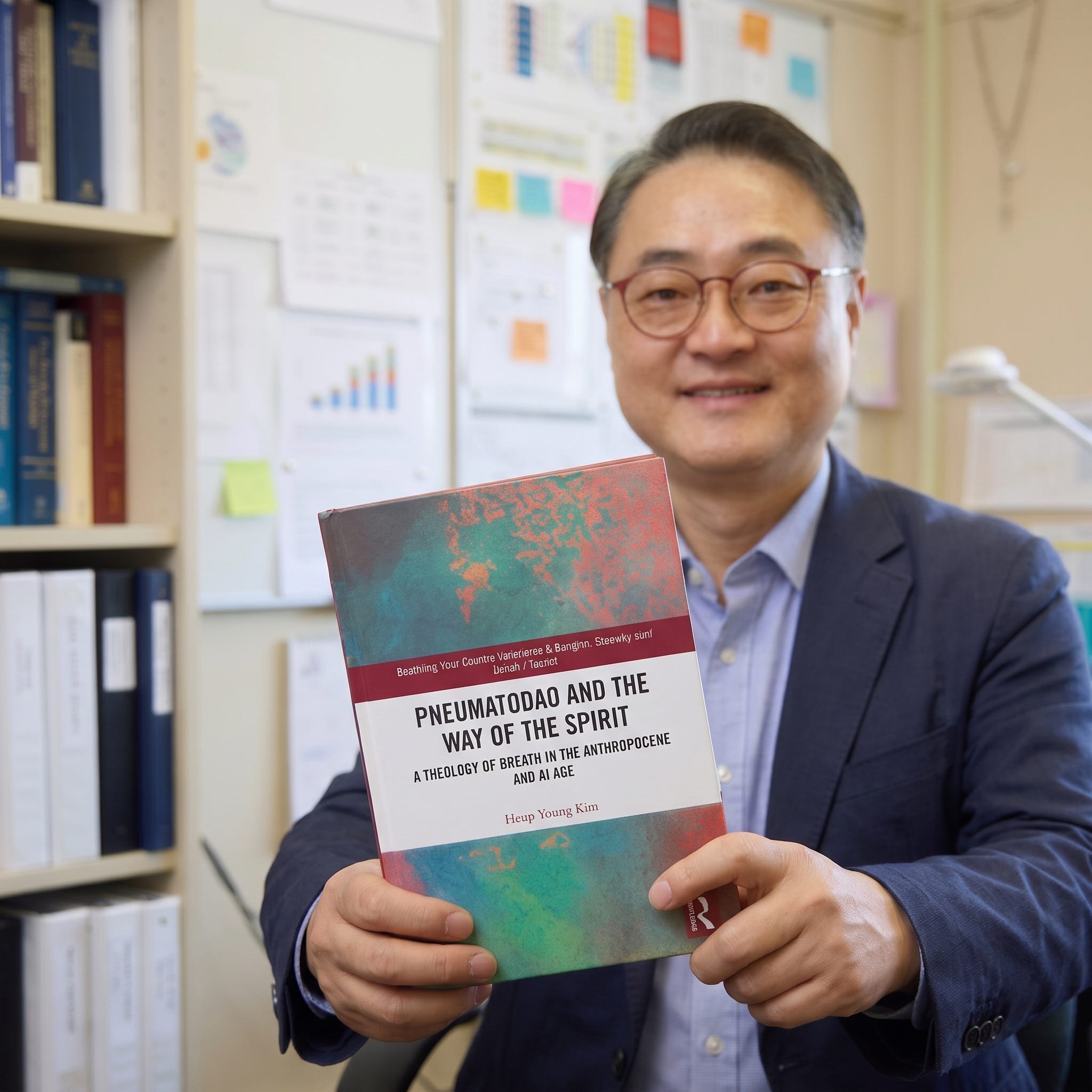
So when I opened Kim’s new book, Pneumatodao and the Way of the Spirit: A Theology of Breath in the Anthropocene and AI Age, its first sentence felt less like a thesis than a description of something I had felt on the mat. Kim states the conviction behind the whole book plainly: “a breathless age requires a theology of breath” (Kim, 2027, Preface).
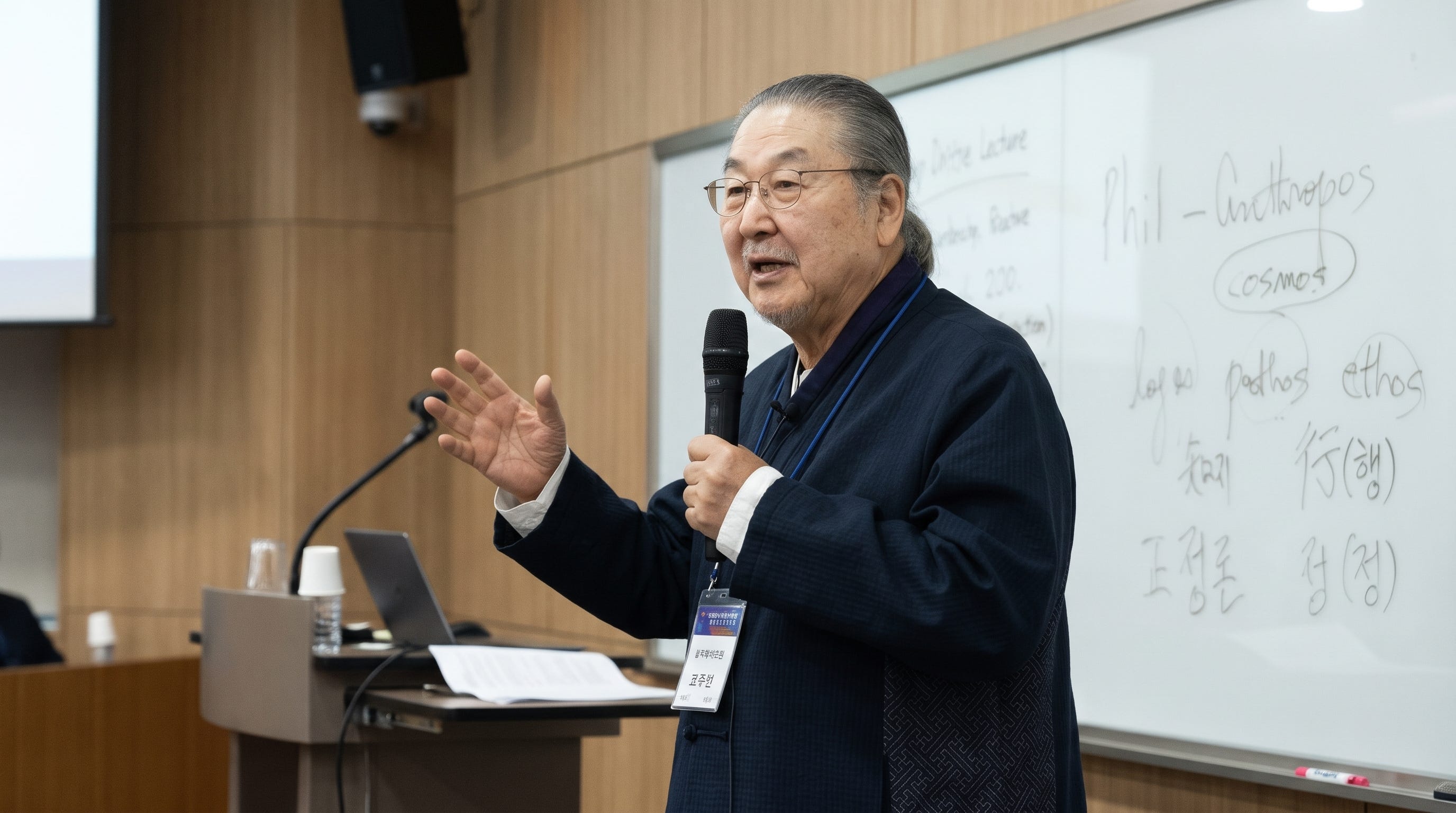
Photo Source: https://www.meconomynews.com/news/articleView.html?idxno=203345
Kim is a theologian, priest, and retired professor of systematic theology at Kangnam University, and a founding fellow of the International Society for Science and Religion. For most of his career he has worked on one demanding question: how can Christian theology speak faithfully through East Asian and Korean ways of thinking without losing its center? This book, released by Routledge in October 2026, is his answer for the doctrine of the Holy Spirit. It is also a book about artificial intelligence, ecological crisis, and what it means to remain human, which is why it belongs on the desks of readers well beyond theology.
2. Reading Pneumatodao
Pneumatodao is the third stage of a long project. A Theology of Dao (Kim, 2017) and Theodao II (Kim, 2025) set out a Christian theology of the Way. Christodao (Kim, 2026) read Jesus Christ as the Way of God in the flow of Dao. The new book asks the matching question about the Spirit. It runs 248 pages across an introduction, eight chapters, and a conclusion.
2.1 Two Breathless Crises
The book begins from two crises that Kim treats as one. The first is ecological. In the Anthropocene, air, water, soil, and forests are damaged, and the poorest communities feel it first. Breathing, Kim argues, is no longer a private bodily act. It is shared, political, and theological. When creation stops being seen as Spirit-breathed, it becomes a stockpile: forests turn into carbon units, rivers into energy, bodies into labor power.
The second crisis is technological. AI now shapes how we write, learn, work, govern, and even pray. Kim does not dismiss its benefits. His concern lies deeper than safety and bias. AI can generate language and simulate reasoning, but it does not breathe, suffer, repent, or stand before God. The danger he names is not mainly that machines will grow powerful. It is that people will begin to understand themselves in the image of breathless machines, treating intelligence as calculation, attention as something to be captured, and wisdom as optimization. He calls the AI age a “pneumatological test”: can theology still tell breath from information, and communion from connectivity?
Kim links the two crises under a single diagnosis he calls Spirit-forgetfulness. It rarely looks like an open denial of God. It looks like a practical imagination in which creation is a resource, bodies are data, knowledge is control, and the future is a management project rather than a horizon of hope. Readers who work in organizations will recognize that imagination. Many of us were trained in it.
2.2 Dao, Ki, and Ganying: A Grammar, Not a Substitute
The center of the book is a grammar built from three East Asian categories. Dao (道) names the Spirit as the living Way. Ki (氣) names the creaturely breath-field in which Spirit-given life becomes embodied. Ganying (感應) names responsive resonance, the way beings affect and answer one another, and becomes Kim’s grammar for grace. He writes ki rather than the Chinese qi to mark the book’s Korean location, and keeps ganying rather than the Korean gameung because English-language scholarship knows it better.
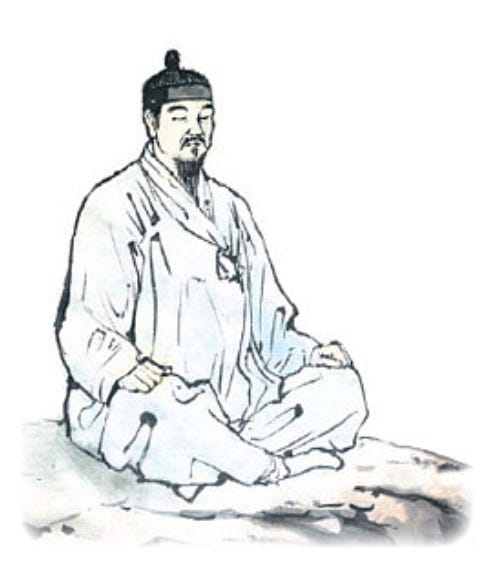
Figure 2: Korean Breathing Meditation, Author’s own ilustration.
Kim writes openly from a Korean theological location shaped by Confucian, Daoist, Korean, and global Christian concerns. He refuses to treat that location as a limitation to overcome before theology can become universal. It is the place his insight comes from. His summary of the stance is memorable: a theology of Dao does not erase the Logos but asks how the Logos may breathe. The same logic holds for the other terms. A theology of ki does not dissolve the Spirit into impersonal energy, and a theology of ganying does not deny divine initiative. Kim calls the resulting picture theanthropocosmic: God, humanity, and cosmos understood not as separate domains but as relationally ordered within the Spirit’s life-giving Way.
What makes the book careful is the line Kim draws around these terms. He names three dangers and argues against each. Syncretism blends traditions until the difference between Creator and creation, or the particularity of Christ, disappears. Reductionism equates Christian doctrine with its nearest Asian parallel, as if Dao were simply the Logos or ki simply the Spirit. The third danger, romanticism, is the one I most appreciated. Kim admits that East Asian traditions are not innocent. Dao and ki have been used to justify social hierarchy and nationalist essentialism, ganying has served authoritarian political cosmologies, and Yin has been used to naturalize the subordination of women. An Asian theologian who says this plainly earns the reader’s trust when he goes on to retrieve those same traditions.
His Korean sources carry much of the weight. Kim draws on Choe Han-gi’s nineteenth-century learning of ki, on Daseok Ryu Yeong-mo, on Kim Chi-ha’s life-thought, and on Donghak’s vision of bearing Heaven within oneself (Sicheonju), which he treats as background resonance rather than a controlling framework. Daseok’s word sumnim (숨님) joins breath with an honorific, so that breath itself is received as a sacred gift. Kim is careful about credit. The terms body theology, breath theology, and body-breath theology are his own constructive formulations, not Daseok’s. He finds them confirmed in Daseok’s life, diagrams, and daily practice, and he receives Daseok as a witness rather than the systematizer of these ideas.
2.3 Four Movements: From Grammar to Technodao
The argument unfolds in four movements. The first builds the foundational grammar. Chapter 1 develops Dao as the living Way and uses Taegeuk, the Supreme Ultimate, as a visual grammar for trinitarian movement. Chapter 2 develops ki through Choe Han-gi’s Kihak while keeping creaturely breath distinct from the personal Holy Spirit. Chapter 3 develops ganying, reading grace as neither coercive force nor human achievement but as the Spirit’s initiative that awakens a response.
The second movement centers and deepens this grammar. Chapter 4, Christodao, reads Jesus as the historical embodiment of the Spirit’s Way: anointed and led by the Spirit, crucified in non-coercive love, and raised by the Spirit into new creation. Chapter 5 retrieves Yin as the Spirit’s receptive, hidden, and life-bearing power while guarding against gender essentialism, and it engages Korean shamanic tradition critically. Chapter 6 builds a somatic pneumatology from Korean terms such as Sumnim, Harusari (living one day at a time before God), Gaon-jjikgi (finding and holding the living center), Bintang (empty openness), and Nori (play).
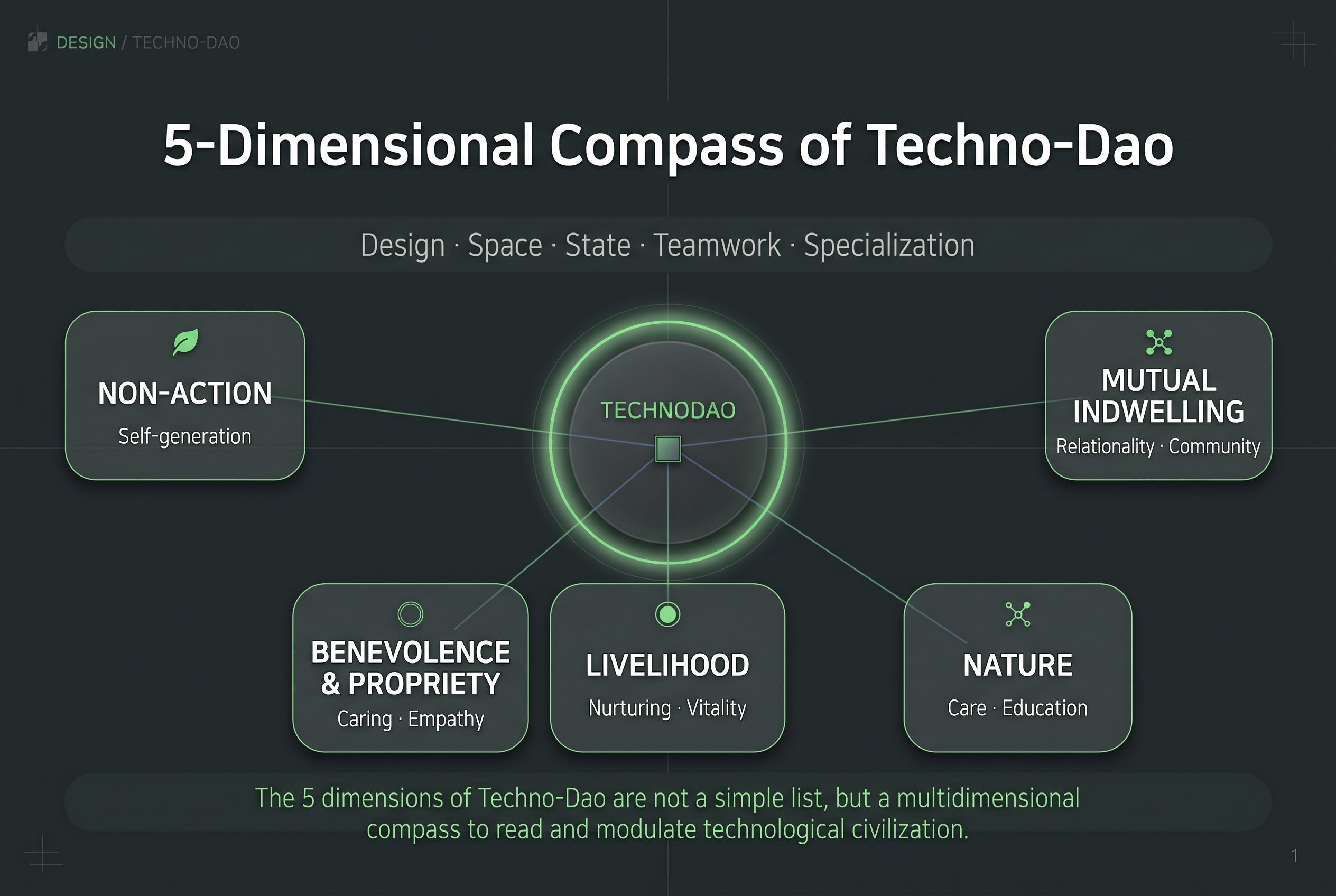
Source: https://www.meconomynews.com/news/articleView.html?idxno=203345
The third movement tests the grammar against the two crises. Chapter 7, Ecodao, treats ecological devastation as a disruption of the breath of creation, drawing on the Donghak ethic of reverence for things. Chapter 8, Technodao, distinguishes information from ki, calculation from wisdom, automation from discernment, and technological salvation from resurrection hope. Its central claim is four words long: AI does not breathe. Here Kim’s coinages do the most work. Digital Bintang names technological space for breath: pause, silence, refusal, and discernment. Algorithmic ganying names the distorted resonance produced by platforms that feed back our biases. Digital Ugeumchi, drawn from the 1894 defeat of the Donghak Peasant Army through Kim Chi-ha, carries that memory of defeat into the algorithmic age.
The conclusion gathers the argument into a single invitation. Against Yuval Noah Harari’s image of Homo Deus (Harari, 2017), Kim proposes homo pneumaticus: a Spirit-breathed human being who receives life as a gift, walks the Way of Christ, honors a wounded creation, and discerns technology with wisdom. Pneumatodao, he insists, is a Way to be walked as well as a doctrine to be argued.
2.4 Where the Book Stands
Kim places the book within four conversations. The first is the modern renewal of pneumatology by Yves Congar, Jürgen Moltmann, and Veli-Matti Kärkkäinen. The second is Asian and intercultural theology, including Lee Jung Young, Peter C. Phan, Amos Yong, Grace Ji-Sun Kim, Hyo-Dong Lee, and Anselm Min. The third is pneumatology through ki or qi, including Koo Dong Yun’s “chiological” approach. The fourth is ecotheology and the theology of technology, from Sallie McFague, Rosemary Radford Ruether, and Catherine Keller to recent work on AI. He also records, quietly, that he proposed a “trilogue” among science, Christian theology, and Asian religions in a 2006 essay, before Amos Yong developed a related trialogical approach.
Kim does not claim originality for any single term. He locates it in the integration: a triadic grammar, centered in Christ, deepened through Yin and body-breath theology, and tested in ecology and technology. That is a fair description of what the book attempts, and of why it reads as a systematic proposal rather than one more contextual essay.
2.5 Breath Before Doctrine: A Practitioner’s Reading
As a practitioner, I read this book through my lungs as much as my eyes. The Kouksundo tradition rests on an old Korean intuition, long predating the arrival of the church, that breath is where the human being meets what is larger than the self. Kim does not build his argument on Kouksundo, and he grounds his body-breath theology in his own constructive work and in Daseok’s witness. Still, my reading of the book is that it treats breathing as something close to the origin of human spirituality, and then asks Christianity to recover and rebuild its own breathing practice.
That is not an exotic demand. It is a return to the Bible’s own vocabulary, in which the Spirit is wind and breath before it is a doctrine. What Korean practice adds is a body of disciplined experience. Daseok’s Harusari and Gaon-jjikgi sound, to a practitioner, like instructions from the mat: live this day, find the center, hold it. For a Korean Christian who has sat through long breathing sessions, the claim that grace works through resonance rather than force is not abstract. It is how practice feels when it goes well. Kim gives that experience a theological language, and in doing so suggests how Christian spirituality might mature for an age of AI rather than simply defend itself against it.
2.6 Questions the Book Leaves Open
A book this ambitious leaves real questions. The first concerns the boundary Kim draws so carefully. He names syncretism, romanticism, and reductionism himself, which is to his credit. Even so, readers from more conservative traditions may still worry that ki and ganying shape the doctrine of the Spirit more than he allows, while scholars of Chinese and Korean thought may ask whether the categories lose something when placed under a christological center. Whether his answers satisfy will depend on the chapters, and readers should judge them there.
The second question concerns AI. The claim that AI does not breathe is theological and philosophical, not empirical, and readers in technology fields may want more engagement with how AI systems are actually built and used. The concepts of Digital Bintang and algorithmic ganying are promising precisely because they could be tested in practice, in classrooms, churches, and workplaces.
The third is access. The hardcover lists at well over two hundred dollars. Kim has encouraged readers to ask university and seminary libraries to buy the book, and a paperback is reported to be planned. That matters, because the book’s audience should include pastors, teachers, and practitioners, not only specialists.
One detail deserves notice. In the preface, Kim openly states that he used AI tools, including ChatGPT, Claude, and Gemini, for brainstorming, organization, and editorial review. He keeps every judgment and every error as his own, and he describes the process as a small exercise in the discernment the book recommends. I have argued in this Forum that anyone who uses AI must be able to stand behind every sentence they publish (Choi, 2026). Kim models that standard in a book about AI itself.
3. Homo Pneumaticus Among Us
Many of us who write for the K-GSP Forum spend our days in places that run on the logic Kim criticizes: universities measured by metrics, organizations driven by optimization, careers mediated by algorithms. His book does not ask us to leave those places. It asks whether we can remain breathing persons inside them, people who stop to breathe before we optimize and learn to receive before we consume.
Kim also shows something our community knows from experience. A Korean scholar can stand inside a Western discipline, honor its center, admit the failures of his own traditions, and still speak in a grammar his grandparents would recognize. That is not a compromise between two worlds. It is a contribution neither world could make alone.
When I next sit down to practice with Professor Kim, the first instruction will be the one it always is: breathe in, breathe out, and pay attention. After reading Pneumatodao, I hear that instruction differently. It may be the oldest spiritual practice we have, and in an age of breathless machines, it may also be one of the most necessary.
References
Choi, J. (2026, October 19). Stand behind every sentence: An AI use guideline from the field for research and practice. K-GSP Forum. https://www.k-gsp.org/p/stand-behind-every-sentence-an-ai
Harari, Y. N. (2017). Homo Deus: A brief history of tomorrow. Harper.
Kim, H. Y. (2017). A theology of Dao. Orbis Books.
Kim, H. Y. (2025). Theodao (Theology of Dao) II: Advancing K-theology in the Anthropocene. Dongyeon.
Kim, H. Y. (2026). Christodao: The way of Jesus, Trinity, and Spirit in the flow of Dao. Cascade Books.
Kim, H. Y. (2027). Pneumatodao and the way of the Spirit: A theology of breath in the Anthropocene and AI age. Routledge.
About the Author
Jeonghwan (Jerry) Choi, PhD, MBA, ME · Managing Editor of K-GSP
Jeonghwan (Jerry) Choi is Managing Editor of K-GSP. He brings over 25 years of business consulting experience and 15 years of teaching and research in leadership, human resource development, and organizational behavior. His work examines how people and organizations develop through change, crisis, and new technology.
Suggested Citation
Choi, J. (2026, November 19). Breathing the Way: Heup Young Kim’s Pneumatodao and a theology of breath for the AI age. K-GSP Forum.
Original Article

한글요약
숨으로 걷는 길: 김흡영의 『Pneumatodao』와 AI 시대의 숨의 신학
필자는 2002년부터 김흡영 교수님과 교류해 왔고, 함께 국선도 수련을 하고 있습니다. 김 교수님은 오랫동안 서양과 동양의 종교적 사유를 기독교 전통 안에서 화해시키고 통합하는 일에 힘써 온 신학자입니다. 학술전문출판사, Routledge 에서 펴낸 새 책 『Pneumatodao and the Way of the Spirit』은 숨이 막힌 시대에는 숨의 신학이 필요하다는 확신에서 출발합니다.
저자는 인류세의 생태 위기와 AI 시대의 기술 문명을 함께 진단하며, 사람마저 숨 쉬지 않는 기계를 닮아 가는 것이 더 깊은 위험이라고 말합니다. 그 대안으로 도(道), 기(氣), 감응(感應)이라는 동아시아의 언어로 성령론을 새롭게 풀어냅니다. 도의 신학은 로고스를 지우지 않고 로고스가 어떻게 숨 쉬는지를 묻는다는 것이 저자의 입장입니다. 저자는 혼합주의, 낭만주의, 환원주의라는 세 가지 위험을 스스로 경계하며, 동아시아 전통이 위계와 국가주의, 여성 억압을 정당화하는 데 쓰였다는 사실도 솔직하게 인정합니다. 다석 유영모의 ‘숨님’, ‘하루살이’, ‘가온찍기’, ‘빈탕’, 최한기의 기학, 김지하의 생명사상이 중요한 대화 상대로 등장하며, 몸과 숨의 신학은 다석의 용어가 아니라 저자 자신의 신학적 개념이라고 밝힙니다.
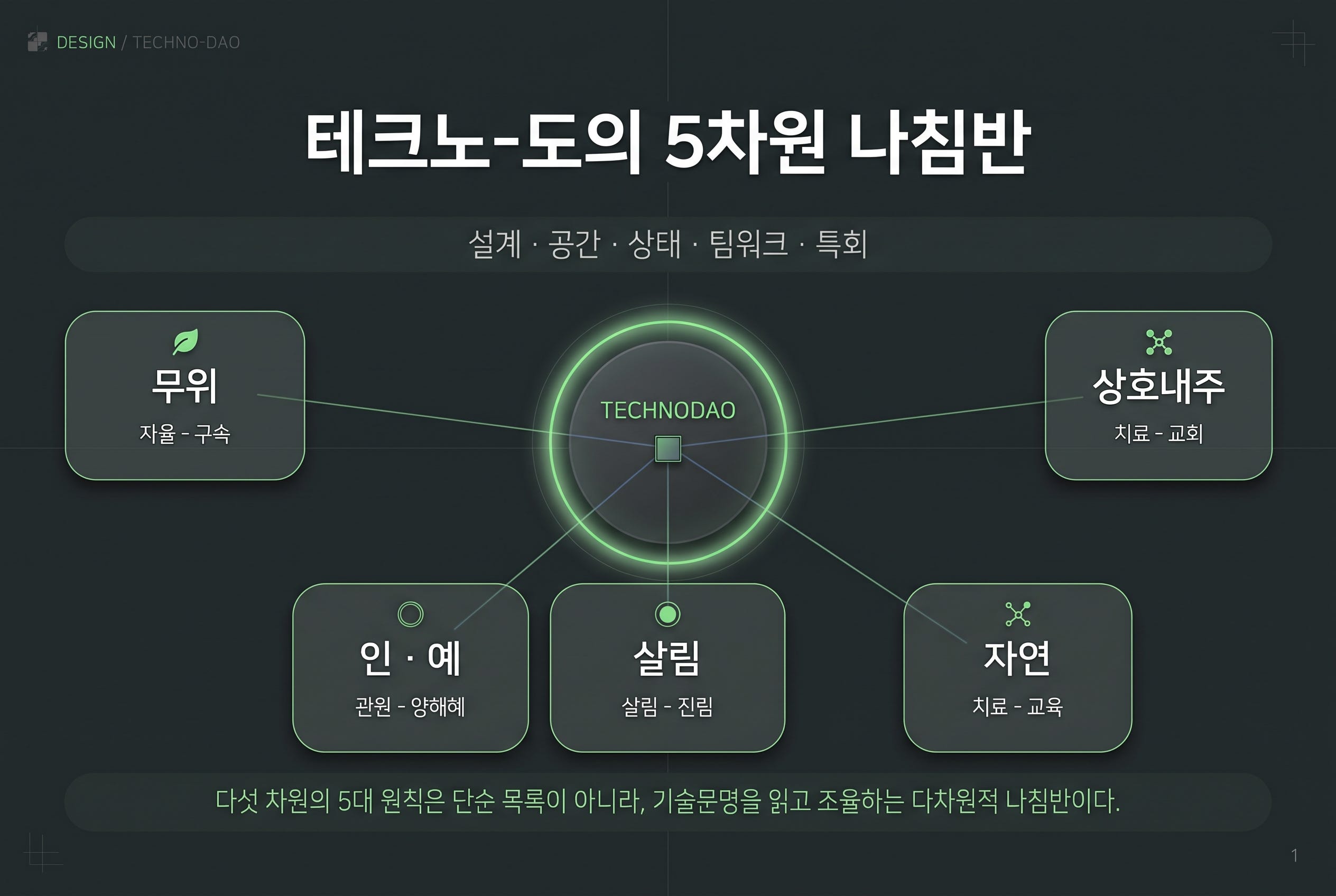
책은 기초 문법, 그리스도도와 음의 성령과 몸·숨의 수련, 생태도와 테크노도, 그리고 결론의 네 흐름으로 전개되며, ‘AI는 숨 쉬지 않는다’는 주장과 함께 ‘호모 데우스’ 대신 ‘호모 뉴마티쿠스’를 제안합니다. 국선도를 함께 수련하는 사람으로서 필자는 이 책이 숨을 인간 영성의 출발점으로 보고, AI 시대에 기독교가 잃어버린 숨의 수련을 되살리자고 말한다고 읽었습니다. 개념의 경계, AI에 대한 경험적 논의 등은 남은 과제입니다. 그래도 이 책은 숨 쉬지 않는 기계의 시대에 숨을 쉬며 주의를 기울이는 일이 가장 오래되고 가장 필요한 영적 수련일 수 있음을 일깨워 줍니다.
© K-Global Scholars and Professionals Forum. All rights reserved. Content published in the K-GSP Forum may not be reproduced, distributed, or transmitted in any form without prior written permission from the K-GSP Forum, except for brief quotations with full attribution.