

EXECUTIVE SUMMARY
Written after attending Sarah Barry’s November 7, 2026, Homecoming Service, this article moves beyond an earlier biographical tribute to examine what remembrance asks of those who remain. Drawing on photographs, intergenerational family participation, and encounters with a worldwide fellowship, it develops six lessons about presence and absence, generational continuity, relationships across boundaries, shared convictions expressed through different lives, unfinished responsibilities, and Christian hope. It argues that honoring spiritual predecessors does not require reproducing their particular lifestyles, but translating enduring faith and love into family, professional, community, and missionary callings. The Homecoming becomes an invitation to fulfill remaining responsibilities, nurture relationships, and live with gratitude and hope in Christ.
Keywords: Sarah Barry; Homecoming; Intergenerational Legacy; Contextual Faithfulness; Christian Fellowship; Eternal Hope
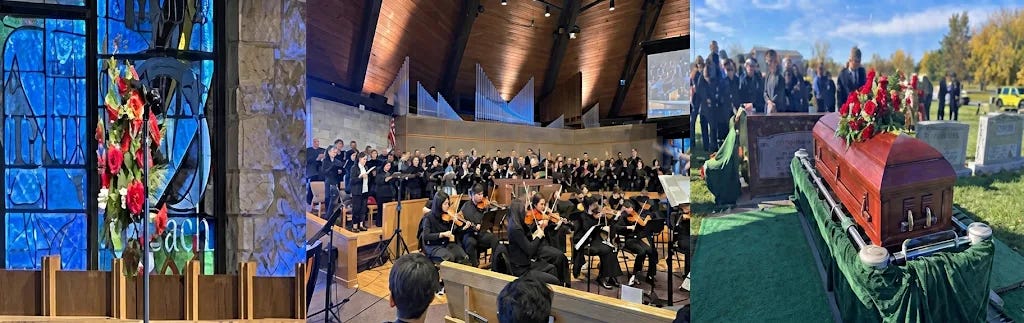
Author’s note on this companion article. This reflection follows Hong’s October 22, 2026, K-GSP Forum tribute, “Sarah Barry (1930–2026): A Kernel of Wheat That Fell to the Ground and Bore Much Fruit.” Whereas that article highlighted Sarah Barry’s life and missionary legacy, the present essay centers on what the November 7 Homecoming revealed to the author about those who remain. It is a personal reflection and does not represent the official views of the University of Toledo, K-GSP Forum, or University Bible Fellowship. Photographs are included with appropriate permission.
1. Introduction: From Remembrance to Personal Reflection
On November 7, 2026, I attended Sarah Barry’s Homecoming Service at Christ Church in Oak Brook, Illinois, after publishing my October 22 tribute following her death. That earlier article honored the life she lived (Hong, 2026); this reflection asks what her Homecoming means for those whose journeys continue. During the service, photographs from different decades appeared on the screen, including several in which I recognized myself. I was grateful that three of my children were there to share the occasion. The convergence of remembered moments and living relationships raised a new question: How can what we have received become meaningful service to others in the years ahead?
At the Homecoming, I also recognized longtime international friends and missional leaders by name. Greeting people after years of separation brought home the distance between a lifetime of relationships and what any single memorial program could contain. Such concrete moments—not merely the photographs or the size of the gathering—moved me from remembrance toward gratitude and renewed responsibility.
In Christian usage, “homecoming” reflects the hope that death does not have the final word for those who belong to Christ (New International Version, 2011, John 11:25–26). Such hope does not diminish grief or erase the particularity of earthly loss; rather, it joins gratitude for what has been received with responsibility for what remains to be done. This essay therefore treats the service not as an occasion for retelling Sarah Barry’s accomplishments, but as a lens through which to reconsider relationships, calling, mortality, and the future.
2. What a Homecoming Reveals Beyond a Lifetime
As photographs moved across the screen, I recognized images from different periods of Sarah Barry’s life, including moments in which I appeared. Some friends were present in Illinois; others, dispersed across countries and circumstances, remained part of the wider story. The presence of my children allowed us to experience the same farewell from different generations’ perspectives. I also greeted international coworkers whom I knew personally by name, renewing relationships that had endured long stretches of geographical distance. These observations became the starting point for the practical reflections that follow; they do not claim to capture every experience or testimony from the service.
3. Six Lessons from Sarah Barry’s Homecoming
Sarah Barry’s Homecoming Service offered more than an occasion to remember her remarkable life; it invited those who gathered to reflect on how faith, love, and meaningful relationships can continue beyond an individual’s earthly journey. The photographs, personal encounters, intergenerational participation, and worldwide fellowship revealed that spiritual influence extends beyond visible accomplishments and formal leadership responsibilities. More importantly, the ceremony raised a practical question: How can the living honor those who have gone before them while faithfully fulfilling their own distinctive responsibilities? The following six lessons translate remembrance into meaningful choices for individuals, families, educators, community leaders, and believers seeking to live with purpose, gratitude, and Christian hope.
3.1. Presence and Absence: Recognize Relationships Beyond the Gathering
A memorial gathering brings together those who can attend, but it cannot encompass the countless relationships, prayers, and acts of kindness that shaped a person’s life. Sarah Barry’s Homecoming reminded me that many individuals influenced by her ministry were not physically present, yet their absence did not diminish the significance of their relationships with her. Ricoeur (2004) helps illuminate how remembrance extends beyond visible records and public recognition, preserving meanings that continue through personal narratives and shared experiences. The practical lesson is to reconnect with individuals whose quiet contributions have enriched our lives, express gratitude while opportunities remain, and preserve meaningful stories with sensitivity and permission. A life should not be measured merely by those who gather at its conclusion, but also by the relationships that continue carrying its influence forward.
3.2. Generational Continuity: Share Meaning Without Prescribing Identity
The participation of succeeding generations in remembering a spiritual predecessor provides an opportunity to transmit values while respecting the distinctive circumstances of younger people. The Homecoming reminded me that children and grandchildren may inherit meaningful stories, relationships, and spiritual convictions without necessarily following the same personal or professional paths as their predecessors. Bengtson et al. (2013) demonstrate the importance of family relationships in transmitting religious commitments, while Fowler (1981) emphasizes the developmental nature of faith and personal understanding. The practical lesson is to invite younger family members, students, and friends to reflect on what they find meaningful in the lives of earlier generations, listen respectfully to their perspectives, and encourage them to exercise independent judgment. Enduring spiritual influence becomes especially meaningful when inherited convictions inspire thoughtful personal commitments rather than expectations of identical lifestyles or predetermined life choices.
3.3. Relationships Across Boundaries: Treasure the Worldwide Fellowship
The Homecoming brought renewed appreciation for the extraordinary privilege of belonging to a worldwide Christian fellowship extending across nationalities, cultures, professions, and generations. Relationships developed through Bible study, prayer, hospitality, and shared service can retain their significance even when geographical distance and changing responsibilities limit regular contact. Putnam and Campbell (2010) illuminate the capacity of religious communities to foster social connections, while also recognizing that meaningful relationships require continued attention across differences. The practical lesson is to renew neglected friendships through personal messages, conversations, visits, prayer, or hospitality, transforming occasional ceremonial reunions into sustained mutual encouragement. The enduring strength of worldwide fellowship lies not simply in organizational reach or institutional affiliation, but in the personal bonds of trust, respect, and care that individuals continue to nurture.
3.4. Different Lives, Shared Convictions: Discern One’s Own Calling
Sarah Barry’s life demonstrated a distinctive commitment to Jesus Christ through missionary service, Bible teaching, personal discipleship, and compassionate relationships, shaped by her historical circumstances and particular calling. Yet honoring her example does not require succeeding generations to adopt identical ways of living, serving, or exercising leadership. Palmer (2000) emphasizes the importance of discerning one’s authentic vocation, suggesting that meaningful service emerges when individuals recognize and respond faithfully to their distinctive gifts and responsibilities. The practical lesson is to identify enduring convictions in Sarah Barry’s example—Christ-centered faithfulness, attentive personal care, cultural humility, and perseverance—and consider how these can be expressed through one’s own family, professional, community, or missionary responsibilities. Genuine continuity is achieved not through uniformity of life patterns, but through shared spiritual principles expressed faithfully in different personal journeys (Barry, 2004).
3.5. The Unfinished Work of the Living: Reconsider What Remains
The conclusion of one person’s earthly journey invites those who remain to reconsider their own responsibilities, priorities, and opportunities for meaningful contribution. Sarah Barry’s Homecoming encouraged reflection not merely on what she accomplished, but also on what others can continue through their distinct gifts, relationships, and responsibilities. As noted in my earlier tribute, preparing succeeding generations was an important dimension of her legacy; the present reflection extends that lesson by asking how individuals can discern which responsibilities to complete, which relationships to strengthen, and which tasks to entrust to others (Hong, 2026). McAdams (2006) provides a useful perspective on how individuals construct meaningful life narratives through commitments that contribute to others and extend beyond immediate personal achievements. The practical lesson is to identify responsibilities worth completing faithfully, encourage capable successors, and recognize that purposeful living requires both continued service and the humility to share or transfer responsibilities when appropriate. Finishing well is not necessarily about accomplishing more personally, but about enabling meaningful work and relationships to flourish beyond one’s own involvement.
3.6. Earthly Farewell and Eternal Fellowship: Hold Grief and Hope Together
Sarah Barry’s Homecoming was an occasion of earthly farewell, yet it also expressed the Christian conviction that death does not represent the final boundary of fellowship in Jesus Christ. Such hope does not eliminate the sorrow of separation or diminish the importance of mourning, but it provides a spiritual perspective through which gratitude, grief, and anticipation of eternal life can coexist. Wright (2008) emphasizes the centrality of resurrection hope in Christian faith, reminding believers that confidence in God’s future should deepen, rather than weaken, their commitment to meaningful relationships and faithful service in the present. The practical lesson is to accompany grieving individuals with compassion, cherish relationships while opportunities remain, and cultivate a faith that faces human mortality with humility, gratitude, and confidence in Christ. As explored further in Section 5.3, the Christian hope of eternal fellowship transforms a Homecoming from a final earthly separation into an invitation to live the remaining journey with greater love, responsibility, and joy.

Figure 1. From Homecoming Experience to Continuing Legacy
Note. The three-part framework interprets Homecoming experience, shared reflection, and renewed commitment as mutually reinforcing rather than strictly sequential. Source: Author’s original conceptual synthesis with AI assistance. The displayed figure is an image-based infographic with AI-generated symbolic illustrations; it is not an editable Word-cell diagram and does not use third-party stock photographs.
4. One Life, Many Paths: Honoring Faithfulness in Different Callings
A meaningful tribute honors the purpose of a life while recognizing that each person receives a different calling. Sarah Barry’s particular path through postwar Korean mission, Bible teaching, and Christian leadership arose from her distinctive gifts and commitments. Those same values may be lived through family, scholarship, professional responsibility, community service, or ministry. Continuity lies not in identical choices but in shared faith and love expressed in appropriate ways (Barry, 2000; Hong, 2026).
4.1. Distinguishing Historical Patterns from Enduring Principles
An admired predecessor’s approach can be deeply valuable in its own historical setting without becoming the only faithful way forward. The realities of postwar student mission differ from those of present-day families, workplaces, and international communities. We can respectfully ask what purposes animated earlier choices, what commitments remain enduring, and what forms of service would now benefit others. Such discernment preserves the worth of a predecessor’s contribution while allowing successors to respond thoughtfully to their own circumstances (MacIntyre, 2007; Palmer, 2000).
4.2. Four Contemporary Callings
The same commitment to faith and love can assume distinct responsibilities. Parents nurture trust and moral judgment without controlling children’s life choices; teachers and professionals use knowledge and influence for the good of others; community leaders build trustworthy relationships and prepare successors; and missionaries practice hospitable witness in culturally sensitive ways. These are not competing measures of spiritual worth. They are different settings in which service, humility, disciplined reflection, and steadfast relationships can bear fruit (Bosch, 1991; Volf, 1991).
4.3. Faithful Continuity Through Contextual Adaptation
Adaptation does not require abandoning cherished convictions. Scripture-centered learning, relational concern, cultural humility, and responsible stewardship can continue even as methods and institutions evolve. Educators may express them through mentoring, parents through patient presence, and community leaders through encouragement and shared responsibility. The central question is how to serve God and neighbor faithfully in the present (Volf, 1991).
As I noted in the earlier tribute, integrity and care for others matter even when Christian communities face differences or difficult transitions (Hong, 2026). Remembering leaders appreciatively need not prevent thoughtful learning from their limitations, any more than it should diminish their genuine contributions. Christian discipleship remains centered on Christ, and different generations may embody that commitment in distinct and equally meaningful ways (1 Corinthians 11:1; MacIntyre, 2007).
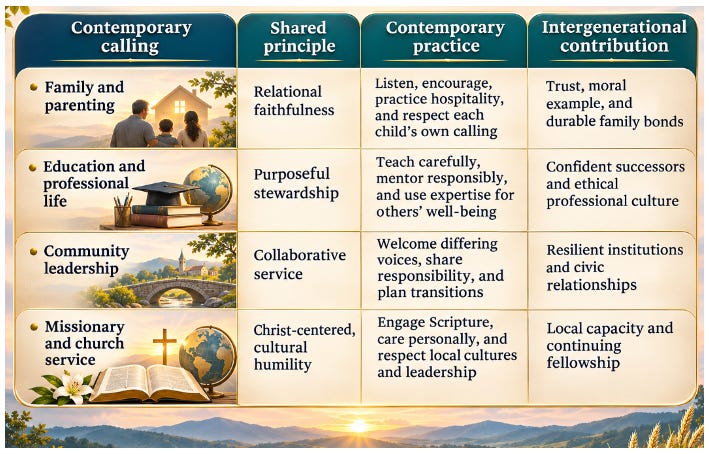
Table 1. Different Callings, Shared Spiritual Principles
Note. Applications are illustrative rather than prescriptive. Source: Author’s original synthesis with AI assistance. The displayed table is an image-based infographic incorporating AI-generated decorative illustrations; its text is not independently editable as Word table cells, and no third-party stock photographs were incorporated.
5. Preparing for Our Own Homecoming: Gratitude, Responsibility, and Eternal Hope
Sarah Barry’s Homecoming Service invited me to reflect not only on her completed earthly journey but also on the remaining chapters of my own life. After more than five decades of professional, family, and spiritual experiences, I have come to recognize that the meaning of a purposeful life lies not simply in accomplishments, recognition, or the number of people who may attend one’s final memorial, but in the relationships nurtured, responsibilities fulfilled, and values entrusted to succeeding generations. The Homecoming deepened my gratitude for family, students, colleagues, and faithful friends across countries and cultures while reminding me that opportunities for meaningful service and personal encouragement remain. It also strengthened my Christian conviction that our earthly journeys, however fruitful or imperfect, ultimately find their deepest meaning in belonging to Jesus Christ and His eternal kingdom. Three complementary priorities emerge from this reflection: fulfilling remaining responsibilities faithfully, nurturing relationships intentionally, and sustaining the hope of eternal fellowship.
5.1. Responsibilities to Fulfill: Serve Wholeheartedly and Prepare Others
The words “No Reserves, No Retreats, No Regrets,” commonly attributed to the young American missionary aspirant William Borden (1887–1913), provide a meaningful perspective on how to approach the remaining years of life with faithfulness, wisdom, and gratitude. “No Reserves” encourages wholehearted commitment to God’s calling while recognizing that responsible stewardship also requires attention to personal health, family responsibilities, and appropriate rest. “No Retreats” emphasizes perseverance through difficulties, yet such perseverance should include humility, discernment, and the willingness to adapt methods or make gracious leadership transitions when circumstances change. “No Regrets” expresses the desire to complete one’s earthly journey with gratitude and integrity, acknowledging that human efforts remain imperfect and ultimately depend on God’s grace. Together, these principles encourage purposeful living without equating faithfulness with endless activity, excessive personal responsibility, or the pursuit of ever-greater accomplishments.
For a scholar and teacher, faithful stewardship includes sharing accumulated knowledge, mentoring students and younger colleagues, strengthening collaborative relationships, and creating opportunities for succeeding generations to develop their distinctive capabilities. Having devoted many decades to teaching, scholarship, and professional service, I increasingly appreciate that meaningful contributions need not be measured by personal achievements alone, but also by the growth and accomplishments of those whom we encourage and equip. McAdams (2006) illuminates the importance of generativity and the desire to contribute beyond one’s immediate life, while Palmer (2000) emphasizes discerning and faithfully fulfilling one’s distinctive calling. As noted in my earlier tribute to Sarah Barry, preparing successors represents an important expression of enduring leadership; the additional lesson for our own Homecoming is to recognize when responsibilities should be completed personally and when they can be entrusted to others (Hong, 2026). Finishing well is not necessarily about doing more ourselves, but about faithfully completing what is entrusted to us while enabling others to carry meaningful work forward.
5.2. Relationships to Nurture: Family, Friends, and Worldwide Fellowship
Among the greatest blessings of my life are the relationships cultivated through family, teaching, professional collaboration, friendship, and shared Christian faith across national and cultural boundaries. Sarah Barry’s Homecoming renewed my appreciation for these connections, reminding me that the most meaningful relationships often develop through ordinary encounters, attentive listening, mutual encouragement, and faithful companionship sustained over many years. Family members, children and grandchildren, students, colleagues, and longtime friends may follow very different paths, yet the bonds formed through love, trust, and shared experiences can remain deeply meaningful. Bellah et al. (1985) emphasize the importance of commitment and community in sustaining meaningful lives, while Putnam and Campbell (2010) illuminate the capacity of religious relationships to create connections that extend beyond immediate social boundaries. These perspectives reinforce a simple but important lesson: relationships should be appreciated and nurtured while opportunities for personal engagement remain, rather than remembered only after separation or loss.
Gratitude becomes especially meaningful when it moves beyond appreciation into intentional acts of love, communication, and mutual care. A thoughtful conversation with a family member, encouragement offered to a struggling student, a personal message to a distant friend, or a prayer shared with a fellow believer can strengthen relationships in ways that formal recognition or material accomplishments cannot. As life’s responsibilities and circumstances change, maintaining meaningful fellowship requires deliberate attention, including the humility to listen, the willingness to reconnect, and the generosity to respect others whose journeys differ from our own. The Homecoming reminded me that the extraordinary privilege of knowing faithful friends from different parts of the world carries a corresponding responsibility to preserve these relationships through continued encouragement and reciprocal care. The richest legacy of our relationships is not how many people we have known, but how faithfully we have loved, encouraged, and remained connected to those entrusted to our lives.
5.3. Hope to Sustain: From Earthly Parting to Eternal Fellowship
Christian faith understands human mortality within the promise of resurrection and everlasting fellowship with Jesus Christ, rather than regarding death merely as the permanent conclusion of earthly existence. Revelation 7:9 portrays a great multitude from every nation, tribe, people, and language standing before God’s throne, offering a profound vision of a fellowship that transcends the national, cultural, generational, and social boundaries of this world. This biblical promise gives special meaning to the worldwide Christian relationships that I have been privileged to experience, suggesting that the fellowship begun through shared faith on earth finds its ultimate fulfillment in God’s eternal kingdom. Wright (2008) emphasizes that Christian resurrection hope is not simply an escape from earthly realities, but a transformative conviction that gives deeper significance to faithful living, relationships, and service in the present. As I contemplate my own eventual Homecoming, my greatest confidence rests not in personal accomplishments, institutional recognition, or the number of people who may remember me, but in belonging to Jesus Christ and sharing the hope of everlasting fellowship with His people.
This eternal hope also transforms how we understand and value the remaining years of our earthly journeys. Recognizing the limits of human life should not lead to anxious preoccupation with mortality, withdrawal from meaningful responsibilities, or an endless effort to secure personal recognition. Rather, it can cultivate a joyful realism that appreciates each day as an opportunity to love family, encourage others, fulfill worthwhile responsibilities, and deepen our fellowship with God and His people. The Christian promise of resurrection allows believers to face earthly separation with genuine sorrow while maintaining confidence that neither death nor human limitations can ultimately defeat God’s faithfulness and love (Wright, 2008). Our greatest privilege is not merely to complete a meaningful earthly journey, but to belong to Jesus Christ, walk faithfully with His people, and anticipate the joy of eternal fellowship in His kingdom.
6. Conclusion: From Remembering a Life to Living More Purposefully
Sarah Barry’s Homecoming reminded me that the ending of one earthly journey can illuminate the meaning and purpose of countless journeys still unfolding. As I reflect on my remaining years, I hope to fulfill my responsibilities faithfully, encourage succeeding generations to discover their distinctive callings, nurture meaningful relationships while opportunities remain, and face the future with gratitude, humility, and trust in Jesus Christ. The Christian promise of resurrection transforms earthly farewell into eternal hope, not by diminishing the sorrow of separation, but by affirming the joy of everlasting fellowship in God’s kingdom. A meaningful life is not measured merely by what we accomplish before our departure, but by the faith, love, and encouragement that continue flourishing in the lives of others. The greatest tribute to a life faithfully completed is not to reproduce its footsteps, but to discover how its enduring faith and love can flourish through our own distinct journeys.
References
Barry, S. (2000, November 7). The kernel of wheat [Bible study message on John 12:20–36]. University Bible Fellowship. https://ubf.org/resources/show/the-kernel-of-wheat
Barry, S. (2004). Biography [Autobiographical recollections]. In Loving Memory of Sarah Barry. https://sarahbarry.org/life
Bellah, R. N., Madsen, R., Sullivan, W. M., Swidler, A., & Tipton, S. M. (1985). Habits of the heart: Individualism and commitment in American life. University of California Press.
Bengtson, V. L., Putney, N. M., & Harris, S. C. (2013). Families and faith: How religion is passed down across generations. Oxford University Press.
Bosch, D. J. (1991). Transforming mission: Paradigm shifts in theology of mission. Orbis Books.
Fowler, J. W. (1981). Stages of faith: The psychology of human development and the quest for meaning. Harper & Row.
Hong, P. C. (2026, October 22). Sarah Barry (1930–2026): A kernel of wheat that fell to the ground and bore much fruit. K-GSP Forum. https://www.k-gsp.org/p/sarah-barry-19302026-a-kernel-of-0a7
MacIntyre, A. (2007). After virtue: A study in moral theory (3rd ed.). University of Notre Dame Press.
McAdams, D. P. (2006). The redemptive self: Stories Americans live by. Oxford University Press. https://doi.org/10.1093/acprof:oso/9780195176933.001.0001
Palmer, P. J. (2000). Let your life speak: Listening for the voice of vocation. Jossey-Bass.
Putnam, R. D., & Campbell, D. E. (2010). American grace: How religion divides and unites us. Simon & Schuster.
Ricoeur, P. (2004). Memory, history, forgetting (K. Blamey & D. Pellauer, Trans.). University of Chicago Press. https://doi.org/10.7208/chicago/9780226713465.001.0001
The Holy Bible, New International Version. (2011). Zondervan.
Volf, M. (1991). Work in the spirit: Toward a theology of work. Oxford University Press.
Wright, N. T. (2008). Surprised by hope: Rethinking heaven, the resurrection, and the mission of the church. HarperOne.
About the Author

Paul C. Hong (Editor-in-Chief) - Distinguished University Professor, University of Toledo
Full list of his K-GSP columns:
Paul C. Hong is a Distinguished University Professor at the University of Toledo whose academic background integrates economics, manufacturing management, engineering, and global supply chain strategy. He earned a B.A. in Economics from Yonsei University, an M.A. in Economics from Bowling Green State University, and a Ph.D. in Manufacturing Management and Engineering from the University of Toledo. His research focuses on global supply chain management, strategic benchmarking, manufacturing competitiveness, resilience, industrial policy, and geo-economics, with particular interest in how trade policy, technological change, economic security, and geopolitical competition reshape international production networks and national competitiveness. His current work increasingly examines the intersection of global supply chains, strategic industries, AI-enabled transformation, and geo-economic relations among major economies, emphasizing how firms and nations can balance efficiency, resilience, strategic autonomy, and international cooperation in an increasingly complex global environment.
Suggested Citation
Hong, P. C. (2026, November 17). One life, many paths: What Sarah Barry’s homecoming teaches us about our own journeys. K-GSP Forum. 1-11.
Original Article:

한국어 요약
한 사람의 삶, 서로 다른 길: 배사라 선교사의 천국 환송예배가 우리의 삶에 전하는 교훈
2026년 11월 7일, 일리노이주 오크브룩에서 열린 배사라(Sarah Barry, 1930–2026) 선교사의 천국 환송예배에 참석하였다. 10월 22일에 발표한 첫 글이 그의 삶과 선교적 유산을 돌아보았다면, 이번 글은 예배 이후 남아 있는 사람들이 어떻게 살아가야 할지를 성찰한다. 예배 중 상영된 여러 시대의 사진에서 나 자신의 모습을 발견했고, 세 자녀와 함께 그 장면을 바라보았으며, 오랜 세월 떨어져 지낸 세계 각국의 동역자들과 다시 인사를 나누었다. 이 구체적인 순간들은 추모의 의미를 감사와 새로운 책임의 문제로 확장해 주었다.
이 경험에서 여섯 가지 실천적 교훈을 얻었다. 첫째, 조용히 삶에 영향을 준 이들에게 늦기 전에 감사하자. 둘째, 다음 세대와 이야기를 나누되 동일한 인생을 요구하지 말자. 셋째, 국경과 문화의 거리를 넘어 오랜 우정을 돌보자. 넷째, 신앙의 선배가 보여 준 믿음과 사랑을 자기 소명 안에서 새롭게 실천하자. 다섯째, 남은 책임을 성실히 감당하면서 후배에게 역할을 나누어 주자. 여섯째, 이별의 슬픔을 존중하되 그리스도 안에서의 부활과 영원한 교제에 대한 소망을 붙들자.
배사라 선교사의 삶은 그의 시대와 상황에서 형성된 귀한 소명의 한 모습이었다. 오늘날 가족, 교육과 직업, 지역사회, 교회와 선교의 영역에서는 같은 믿음과 사랑을 서로 다른 방식으로 표현할 수 있다. 앞선 세대의 헌신을 존중한다는 것은 그 방식을 모두 같게 만드는 일이 아니라 그 정신을 분별력 있게 이어 가는 것이다. 특히 정직과 책임, 상호 존중과 배려는 세대를 연결하는 중요한 실천이 된다.
이 환송예배는 나 자신의 남은 여정을 돌아보게 하였다. 흔히 윌리엄 보든(William Borden, 1887–1913)의 말로 전해지는 “No Reserves, No Retreats, No Regrets”를 무리한 성취의 요구가 아니라 성실한 섬김, 지혜로운 인내, 은혜에 대한 감사로 이해하고 싶다. 이제 중요한 것은 가족과 친구, 학생과 동역자를 소중히 여기며 다음 세대가 자신의 길을 발견하도록 돕는 일이다. 온전히 마친 한 삶을 가장 뜻깊게 기리는 방법은 그 발자취를 그대로 복제하는 것이 아니라, 그 삶에 담긴 믿음과 사랑을 우리 각자의 길에서 새롭게 꽃피우는 것이다.
Paul C. Hong 은 미국 톨레도대학교 Distinguished University Professor로, 글로벌 공급망 관리, 조직 경쟁력, 리더십과 세대 간 인적 역량 개발을 연구하며 국제 학술교류 및 K-GSP Forum 집필 활동을 이어가고 있다.
© K-Global Scholars and Professionals Forum. All rights reserved. Content published in the K-GSP Forum may not be reproduced, distributed, or transmitted in any form without prior written permission from the K-GSP Forum, except for brief quotations with full attribution.
Thank you, Dr. Hong, for this moving reflection on Sarah Barry’s Homecoming. Your distinction between imitating a predecessor's exact lifestyle and faithfully translating enduring Christian convictions into our own families, callings, and relationships offers profound, practical wisdom for the next generation living with hope in Christ.